SSB Interview Preparation 2026: Complete Guide for Defence Aspirants
The Services Selection Board (SSB) Interview is one of the most important stages for candidates aspiring to become officers in the Indian Armed Forces. Whether you are preparing for NDA, CDS, AFCAT, CAPF, or Technical Entry schemes, clearing the SSB interview is essential to achieving your dream of wearing the uniform.
The SSB is not just an interview. It is a comprehensive personality and leadership assessment process designed to identify officer-like qualities in candidates. Thousands of aspirants clear the written examination every year, but only a limited number successfully clear the SSB.
At LWS SSB Interview, we focus on personality development, confidence building, communication improvement, psychological preparation, and real SSB-oriented training to help defence aspirants perform confidently during the selection process.
What is the SSB Interview?
The Services Selection Board (SSB) is a five-day assessment process conducted by the Indian Armed Forces to evaluate whether a candidate possesses the qualities required to become a military officer.
The SSB tests candidates mentally, physically, emotionally, and socially through various tasks, interviews, and group activities.
SSB interviews are conducted for:
• NDA Entry
• CDS Entry
• AFCAT Entry
• TES Entry
• Navy and Air Force Entries
• Technical and Non-Technical Defence Entries
Why SSB is Different from Normal Interviews
The SSB interview does not focus only on academic knowledge. Instead, it evaluates personality traits, leadership ability, decision-making skills, communication, teamwork, confidence, and officer-like qualities.
The selection process is designed to identify candidates who can lead troops and perform effectively under pressure.
Officer Like Qualities (OLQs) Assessed in SSB
The SSB board evaluates several officer-like qualities during the selection process.
Important OLQs Include:
• Leadership Ability
• Effective Communication
• Confidence
• Teamwork
• Responsibility
• Decision-Making Ability
• Social Adaptability
• Initiative Taking
• Mental Toughness
• Positive Attitude
Complete SSB Interview Process
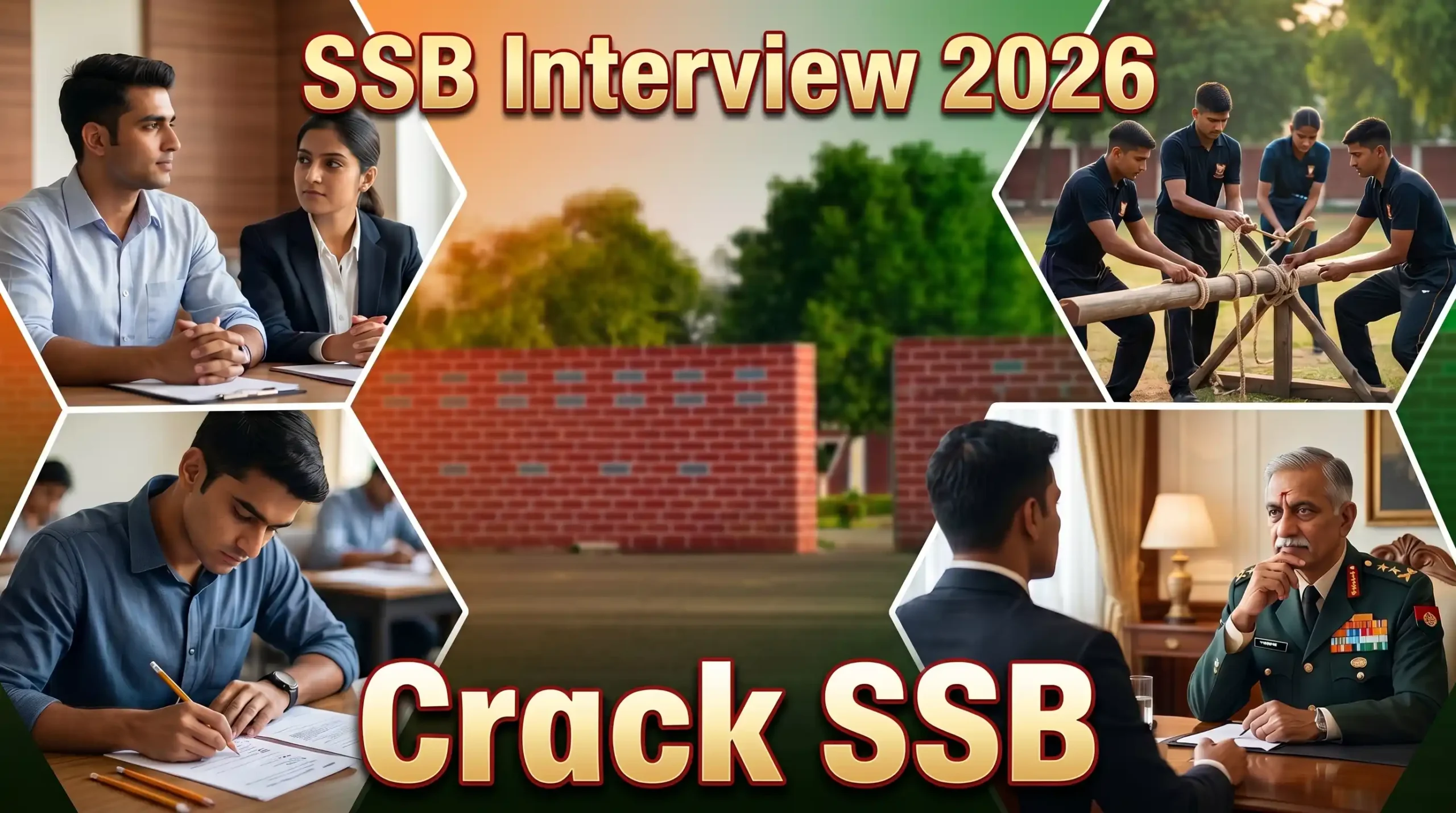
The SSB interview generally lasts for five days and consists of multiple testing stages.
Day 1 – Screening Test
Officer Intelligence Rating (OIR) Test: This includes verbal and non-verbal reasoning questions designed to test mental ability and intelligence.
Picture Perception and Discussion Test (PPDT): Candidates observe a picture, write a story, and participate in group discussions based on their interpretation.
Only candidates clearing the screening process proceed to the next stages.
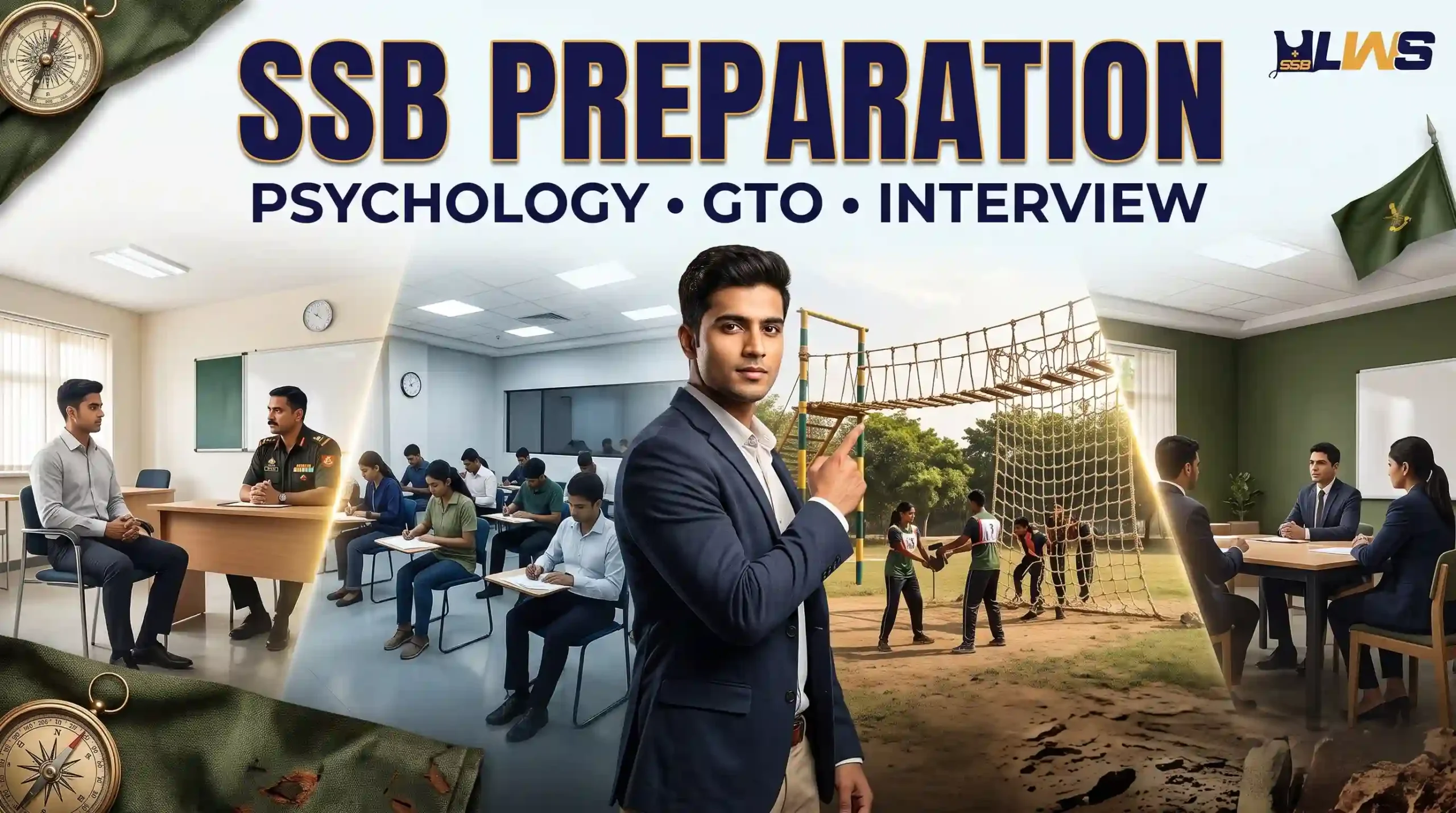
Day 2 – Psychology Tests
The psychology tests are conducted to evaluate subconscious personality traits and natural responses.
The Tests Include:
• Thematic Apperception Test (TAT)
• Word Association Test (WAT)
• Situation Reaction Test (SRT)
• Self Description Test (SDT)
Consistency, clarity of thought, positivity, and natural responses are extremely important in psychology tests.
Day 3 & 4 – GTO Tasks
The Group Testing Officer (GTO) tasks evaluate teamwork, leadership, planning ability, and communication skills.
Common GTO Activities Include:
• Group Discussions
• Group Planning Exercise
• Progressive Group Tasks
• Half Group Tasks
• Individual Obstacles
• Command Task
• Lecturette
• Final Group Task
The GTO tasks are designed to assess how candidates perform in team situations and leadership roles.
Personal Interview
The personal interview is conducted by the Interviewing Officer to understand the candidate’s background, personality, confidence level, goals, and awareness.
Questions are generally asked about:
• Family Background
• Education
• Hobbies and Interests
• Current Affairs
• Achievements
• Career Goals
• Personal Life Experiences
Honesty, confidence, and clarity are extremely important during the interview.
Conference Round
On the final day, all assessors collectively discuss the performance of candidates before announcing the final recommendation results.
Common Mistakes Made by SSB Aspirants
Trying to Fake Personality:
SSB assessors are highly experienced and can easily identify unnatural behavior.
Lack of Communication Skills:
Many candidates struggle due to poor communication and low confidence.
Ignoring Current Affairs:
Defence awareness and current affairs preparation are extremely important.
Overconfidence or Aggression:
Balanced behavior and teamwork are essential in group activities.
How LWS SSB Interview Helps in SSB Preparation
LWS SSB Interview provides structured SSB preparation guidance for NDA, CDS, AFCAT, and defence aspirants through practical training and personality development programs.
Our SSB Preparation Support Includes:
• Mock SSB interviews
• Psychology test practice
• PPDT and storytelling guidance
• Group discussion preparation
• Communication and confidence building
• Lecturette practice sessions
• Officer-like qualities development
• Personal interview mentorship
• Defence current affairs guidance
At LWS SSB Interview, we focus on improving natural personality traits and helping aspirants perform confidently in real SSB environments.
Tips to Crack SSB Interview Successfully
Be Natural: Always present your genuine personality instead of pretending to be someone else.
Improve Communication Skills: Practice speaking confidently and clearly in English and Hindi.
Stay Physically Active: Fitness and energy levels positively impact performance during tasks.
Read Current Affairs Daily: Stay updated with defence, national, and international news.
Practice Leadership in Daily Life: Leadership qualities are developed through habits and practical experiences.
Final Words
The SSB interview is a life-changing opportunity for defence aspirants who dream of becoming officers in the Indian Armed Forces. Success in SSB requires confidence, discipline, communication skills, leadership qualities, and the right mentorship.
LWS SSB Interview continues to guide ambitious defence aspirants through focused SSB preparation, personality development, and performance-oriented training designed to help candidates achieve their dream of joining the Armed Forces.