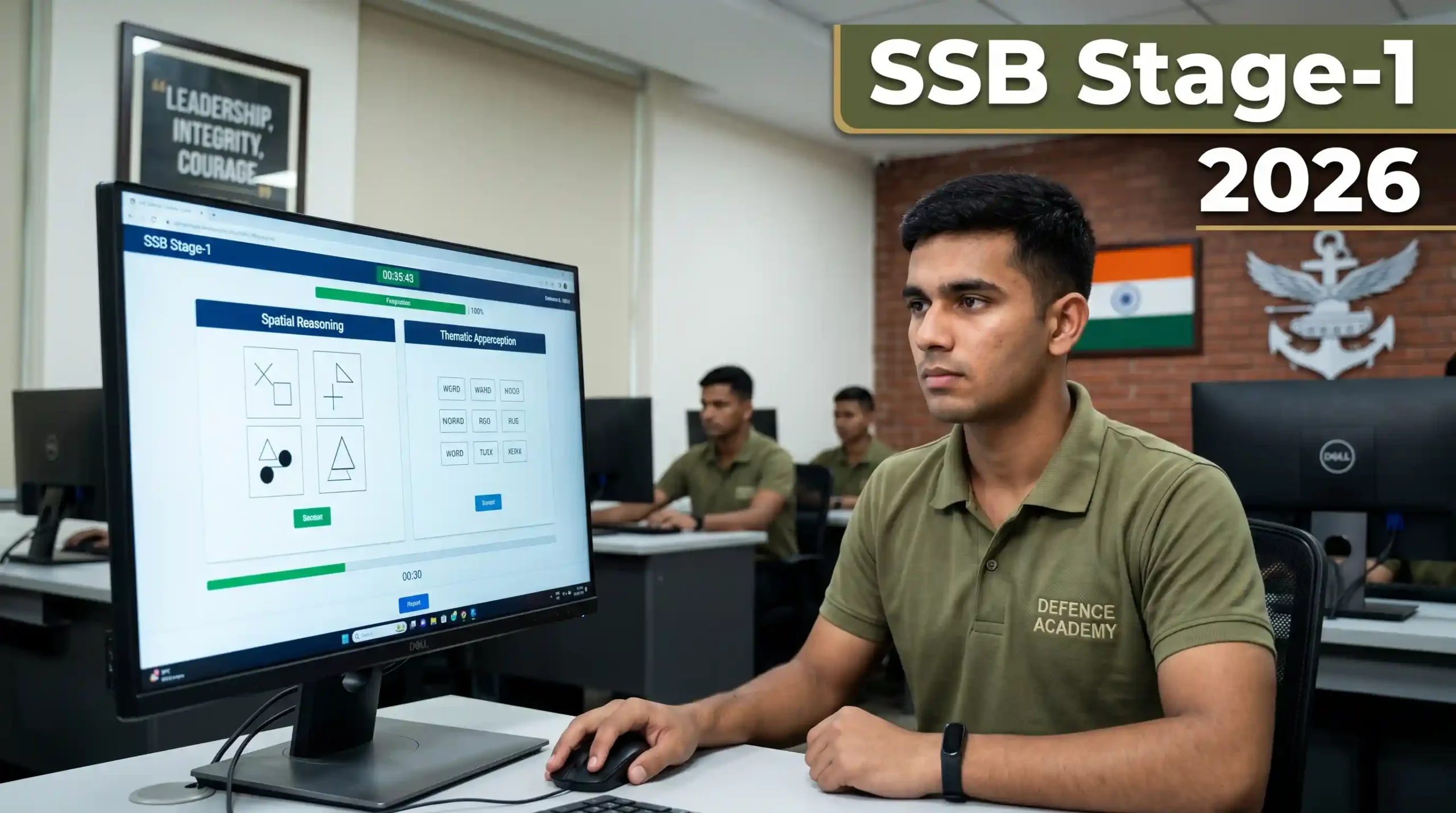
The Services Selection Board (SSB) interview process has always evolved with time, and 2026 is bringing one of the biggest changes aspirants have seen in recent years — the modernization of SSB Stage 1 testing through increased computer-based assessment methods. Aspirants preparing for NDA, CDS, AFCAT, TES, and other defence entries must now understand not only the traditional screening system but also how digital evaluation methods are changing the overall selection process.
Stage 1 remains the most crucial elimination round of the SSB interview process because a large percentage of candidates get screened out within the very first day. Understanding the latest testing trends, computer-based intelligence assessments, PPDT performance expectations, and officer-like qualities can significantly improve your chances of getting recommended.
What is SSB Stage 1 Testing?
SSB Stage 1 testing is the screening process conducted on Day 1 of the SSB interview. Its main purpose is to filter candidates who possess the basic intelligence, communication ability, observation skills, and officer-like potential required for further testing.
The Stage 1 screening process generally includes:
• Officer Intelligence Rating (OIR) Tests
• Picture Perception and Discussion Test (PPDT)
• Initial personality observation by assessors
Only candidates who clear Stage 1 are allowed to proceed to the remaining 4-day psychological, GTO, and personal interview process.
Why is SSB Moving Towards Computer-Based Testing?
The Indian Armed Forces are rapidly modernizing their recruitment systems to improve efficiency, transparency, and evaluation accuracy. Computer based SSB testing helps reduce manual errors and allows assessors to analyze candidate performance more scientifically.
Some expected benefits of the new testing approach include:
• Faster evaluation process
• Standardized intelligence assessment
• Better time management monitoring
• Improved analytical testing patterns
• Advanced candidate profiling
While the core objective of selecting officer-like candidates remains unchanged, the mode of assessment is becoming more technology-oriented.
Latest Changes Expected in SSB Screening Test 2026
Several coaching experts and defence mentors believe that SSB screening test 2026 may increasingly include digital assessment systems in intelligence testing and reporting structures.
The expected changes may include:
• Computerized OIR test interfaces
• Digital timer-based reasoning questions
• Faster response analysis
• AI-assisted behavioral observation support
• Improved candidate data tracking
However, candidates must understand that the real focus of SSB will always remain personality assessment rather than technical computer skills.
Understanding the OIR Test in Detail
The Officer Intelligence Rating (OIR) test is the first challenge in Stage 1 testing. It mainly evaluates your verbal and non-verbal reasoning ability under strict time pressure.
Questions usually include:
• Series completion
• Coding-decoding
• Blood relations
• Direction sense
• Figure completion
• Pattern recognition
• Logical reasoning
Most candidates fail not because the questions are difficult, but because they lack speed and accuracy.
How to Prepare for Computer Based SSB Testing
As digital testing systems become more common, aspirants should adapt their preparation style accordingly.
Follow these preparation strategies:
• Practice online reasoning mock tests daily
• Improve typing and screen-reading speed
• Develop quick decision-making ability
• Learn time management under pressure
• Solve questions without rough dependency
• Practice full-length timed OIR simulations
Regular digital practice can help candidates remain comfortable during computerized assessments.
PPDT Preparation Strategy for 2026
The Picture Perception and Discussion Test (PPDT) remains one of the most important parts of SSB Stage 1 testing. In this test, candidates observe a blurred image for a few seconds and then write a story based on the scene.
After story writing, candidates narrate their stories individually and participate in a group discussion.
The assessors mainly evaluate:
• Observation skills
• Communication ability
• Confidence level
• Leadership qualities
• Team behavior
• Practical thinking
Common PPDT Mistakes That Cause Rejection
Many aspirants prepare outdated or unrealistic stories from coaching materials. This often makes their responses appear artificial and rehearsed.
Avoid these mistakes:
• Writing over-heroic stories
• Using unrealistic military scenarios
• Speaking aggressively during discussion
• Interrupting other candidates
• Showing negative emotions in stories
• Copying memorized formats
The SSB board looks for natural thinking, balanced judgment, and cooperative behavior.
How to Clear SSB Stage 1 Successfully
To clear SSB Stage 1, candidates must focus on both intelligence performance and personality projection. The assessors observe your overall behavior from the moment you enter the testing environment.
Important success tips include:
• Stay calm and confident
• Maintain positive body language
• Listen carefully during instructions
• Speak clearly during narration
• Support healthy group discussion
• Focus on clarity rather than dominance
• Manage time effectively in OIR tests
Remember that SSB does not expect perfection. It looks for trainable future officers with balanced personalities.
Role of Officer Like Qualities in Stage 1
Even during the initial screening process, assessors begin identifying Officer Like Qualities (OLQs) among candidates. These qualities include leadership, social adaptability, responsibility, initiative, communication skills, courage, and decision-making ability.
Your behavior during PPDT group discussion plays a major role in reflecting these qualities.
Simple habits that help demonstrate OLQs include:
• Respecting others’ opinions
• Remaining composed under pressure
• Thinking logically
• Helping the group reach conclusions
• Showing confidence without arrogance
Best Daily Routine for SSB Aspirants
A disciplined daily routine can improve both your mental sharpness and personality development.
An ideal SSB preparation routine should include:
• Daily newspaper reading
• Reasoning practice
• Group discussion exercises
• Public speaking practice
• Physical fitness training
• Self-introspection activities
• Current affairs preparation
Consistency matters far more than studying for extremely long hours.
Final Thoughts
The modernization of SSB Stage 1 testing in 2026 is not something candidates should fear. The introduction of computer-based systems simply changes the testing method, not the core objective of officer selection.
Candidates who combine intelligence preparation, communication skills, confidence, and authentic personality development will continue to perform well in the SSB interview process.
Rather than searching for shortcuts, focus on becoming a responsible, disciplined, and balanced individual. That is ultimately what the SSB board seeks in future officers of the Indian Armed Forces.