Preparing for your first SSB Interview 2027 can feel challenging because the selection process is very different from a conventional written examination. SSB does not simply test what you know; it evaluates how you think, communicate, behave in a group and respond to different situations.
For first-time candidates, understanding the complete SSB process before reporting can make the experience much more comfortable. A structured preparation strategy covering Screening, Psychology, GTO, Personal Interview and Conference can help you develop the confidence and awareness required for the selection process.
At LWS SSB Interview, candidates are guided through the complete SSB journey with practical training, realistic assessments, experienced mentorship and continuous feedback. This guide explains how beginners can prepare effectively for SSB Interview 2027.
What Is the SSB Interview?
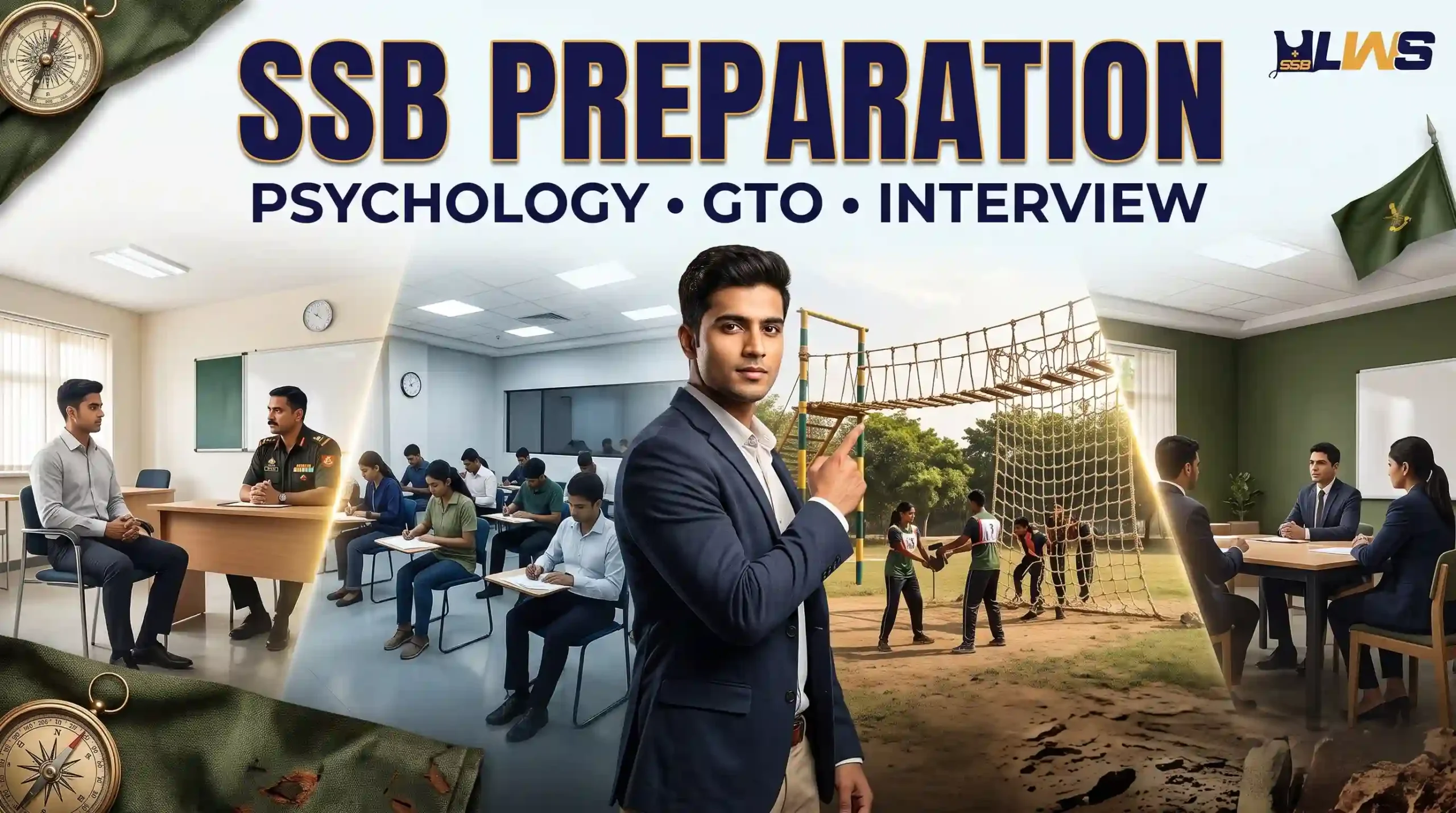
The Services Selection Board (SSB) assesses candidates for their suitability for an officer role in the Indian Armed Forces. The assessment focuses on a candidate’s overall personality rather than academic knowledge alone.
During the SSB process, assessors observe candidates through different activities and interactions to understand qualities such as leadership, teamwork, communication, decision-making, confidence, responsibility and social adaptability.
- Screening and intelligence assessment.
- Picture Perception and Discussion Test (PPDT).
- Psychological assessments.
- Group Testing Officer (GTO) tasks.
- Personal Interview.
- Conference.
- Overall personality and behavioural assessment.
Why First-Time Candidates Need a Proper SSB Preparation Strategy
Many freshers approach SSB with incomplete information. Some prepare only for interview questions, while others focus exclusively on psychology or GTO activities. However, SSB is a multi-stage assessment, and preparation should cover every component.
A proper strategy helps first-time candidates understand what to expect, reduce nervousness and gradually develop the skills required across different stages.
- Understand the complete SSB process.
- Become familiar with the different tests.
- Improve communication and confidence.
- Develop teamwork and leadership skills.
- Build physical fitness.
- Improve current affairs awareness.
- Practise psychological tests.
- Experience realistic GTO activities.
- Prepare for Personal Interview questions.
- Learn from mock assessments and feedback.
Understand the SSB Interview Process Before You Prepare
The first step in SSB Interview Preparation 2027 is understanding the selection process. The core assessment is generally conducted over five days, although the exact sequence and schedule can vary depending on the entry and selection centre.
- Day 1: Screening Tests.
- Day 2: Psychology Tests.
- Day 3: GTO Tasks and other scheduled assessments.
- Day 4: Remaining GTO activities and Personal Interview as scheduled.
- Day 5: Conference and final assessment formalities.
Understanding the purpose of each stage is more useful than simply memorising the five-day schedule.
Step 1: Prepare for the Screening Test
Screening is the first major stage of the SSB process. Candidates who clear the screening stage proceed to the detailed assessment.
The screening process generally includes an intelligence test and the Picture Perception and Discussion Test (PPDT).
How to Prepare for the Intelligence Test
The intelligence test checks reasoning and cognitive ability through verbal and non-verbal questions. First-time candidates should practise regularly rather than trying to learn everything at the last moment.
- Practise verbal reasoning.
- Practise non-verbal reasoning.
- Improve basic numerical ability.
- Work on speed and accuracy.
- Take timed practice tests.
- Analyse questions that you answer incorrectly.
How to Prepare for PPDT
PPDT requires candidates to observe a picture, form a logical interpretation and participate in a group discussion. The focus should be on realistic thinking and effective communication.
- Practise observing pictures within a limited time.
- Identify the main character and situation.
- Create a practical and logical story.
- Organise your thoughts before writing.
- Practise narrating stories within the given time.
- Participate actively during discussions.
- Listen to other candidates.
- Avoid shouting or unnecessarily dominating the group.
PPDT Preparation Tip for Freshers
Do not try to create an exaggerated heroic story for every picture. Your story should reflect practical thinking, initiative and problem-solving while remaining relevant to the situation shown.
During the discussion, remember that effective participation is more important than speaking continuously. Listen, understand the group’s ideas and present your points confidently.
Step 2: Prepare for SSB Psychology Tests
Psychology is one of the most important parts of the SSB assessment. It is designed to understand your thinking process, reactions and personality through different psychological techniques.
Major psychological assessments generally include:
- Thematic Apperception Test (TAT).
- Word Association Test (WAT).
- Situation Reaction Test (SRT).
- Self Description Test (SD).
How to Prepare for TAT
In TAT, candidates are shown pictures and asked to write stories based on them. Instead of memorising standard stories, develop the habit of observing situations and thinking practically.
- Observe the picture carefully.
- Identify the situation.
- Create a realistic storyline.
- Include practical action and problem-solving.
- Manage your time.
- Avoid unnecessarily dramatic stories.
How to Prepare for WAT
WAT presents candidates with words and requires quick responses. Freshers should focus on developing natural and practical thinking instead of memorising hundreds of prepared sentences.
- Practise with random words.
- Improve your response speed.
- Think positively and practically.
- Avoid forced or artificial responses.
- Maintain consistency with your real personality.
How to Prepare for SRT
SRT presents different situations and requires candidates to provide appropriate reactions. The key is to demonstrate practical decision-making rather than writing unrealistic responses.
- Read the situation carefully.
- Identify the main problem.
- Take practical action.
- Prioritise safety and responsibility.
- Use available resources intelligently.
- Avoid unnecessarily complicated solutions.
How to Prepare for Self Description
The Self Description Test requires you to reflect on yourself and explain how you are perceived by people around you. This is an area where honesty and self-awareness are important.
- Understand your strengths.
- Identify areas where you need improvement.
- Think about how your parents view you.
- Understand how teachers or mentors perceive you.
- Reflect on your relationships with friends.
- Be honest about your personality.
Step 3: Prepare for GTO Tasks
The Group Testing Officer (GTO) stage includes various group and individual activities. Candidates are observed for qualities such as cooperation, communication, initiative, leadership, social adaptability and practical problem-solving.
Common GTO activities may include:
- Group Discussion.
- Group Planning Exercise.
- Progressive Group Task (PGT).
- Group Obstacle Race.
- Half Group Task (HGT).
- Lecturette.
- Individual Obstacles.
- Command Task.
- Final Group Task (FGT).
How to Prepare for Group Discussion
Group Discussion is not a competition to determine who can speak the loudest. Candidates should demonstrate the ability to communicate ideas, listen to others and contribute constructively.
- Read newspapers and credible news sources regularly.
- Practise speaking on current topics.
- Develop logical arguments.
- Listen carefully to others.
- Do not interrupt unnecessarily.
- Speak confidently without becoming aggressive.
- Support your points with relevant examples.
How to Prepare for Group Planning Exercise
The Group Planning Exercise requires candidates to analyse a situation, identify problems, prioritise actions and develop a practical solution.
- Identify all important problems.
- Prioritise them according to urgency.
- Use the available resources effectively.
- Consider time and distance where relevant.
- Develop a realistic plan.
- Explain your solution clearly.
How to Prepare for PGT and HGT
PGT and HGT involve group obstacle-solving activities. These tasks require candidates to work together while following the rules provided by the GTO.
- Understand the rules before starting.
- Suggest practical solutions.
- Listen to your teammates.
- Help other group members.
- Take initiative when required.
- Do not try to dominate every activity.
- Remain calm if the first solution fails.
How to Prepare for Lecturette
Lecturette tests your ability to organise your thoughts and communicate them confidently. Freshers should practise speaking on different subjects for a short duration.
- Read about current affairs.
- Practise speaking without preparation.
- Organise your points quickly.
- Maintain confident body language.
- Speak clearly.
- Use simple language.
- Conclude your topic effectively.
How to Prepare for Individual Obstacles
Individual Obstacles require physical confidence, determination and stamina. Candidates should begin physical preparation well before their SSB date.
- Start regular running or jogging.
- Improve cardiovascular endurance.
- Practise basic strength exercises.
- Develop agility and mobility.
- Participate in outdoor sports.
- Follow safe and progressive training.
How to Prepare for Command Task
Command Task gives candidates an opportunity to demonstrate leadership, planning, communication and decision-making. Candidates should focus on understanding the problem before giving instructions.
- Analyse the obstacle carefully.
- Plan before taking action.
- Give clear instructions.
- Use your available resources.
- Listen to suggestions from subordinate members.
- Remain calm if your first plan does not work.
- Take responsibility for your decisions.
Step 4: Prepare for the Personal Interview
The Personal Interview is not simply a question-and-answer session. The Interviewing Officer may ask about your education, family, hobbies, friends, achievements, responsibilities, interests, current affairs and motivation for joining the Armed Forces.
The best preparation is to know yourself thoroughly.
Important Areas to Prepare for the Personal Interview
- Your academic background.
- Subjects you studied.
- Your strengths and weaknesses.
- Your hobbies and interests.
- Sports and extracurricular activities.
- Your family background.
- Your friends and social circle.
- Your responsibilities at home or school/college.
- Your achievements and failures.
- Your hometown and surroundings.
- Current affairs.
- Your reasons for joining the Armed Forces.
- Basic awareness about the service you want to join.
Common Mistake: Memorising Interview Answers
Freshers often search for lists of “100 most expected SSB questions” and memorise answers. This approach can create problems because the Interviewing Officer may ask follow-up questions based on your responses.
Instead of memorising answers, understand your own experiences and prepare to discuss them honestly and confidently.
Step 5: Prepare for the Conference
The Conference is the final stage where assessors discuss the candidate’s performance across the different assessments. Candidates may also be asked a few questions during this stage.
There is no need to become nervous about the Conference. Maintain the same confidence, discipline and politeness that you demonstrated throughout the assessment.
How to Develop Officer-Like Qualities for SSB
One of the biggest misconceptions about SSB is that candidates can learn Officer-Like Qualities in a few days. In reality, personality development takes consistent effort.
You can begin developing these qualities through everyday activities.
- Take responsibility for your tasks.
- Participate in team sports.
- Practise public speaking.
- Take initiative in group activities.
- Develop decision-making skills.
- Help others when appropriate.
- Learn to handle failure constructively.
- Maintain discipline in your routine.
- Improve your communication skills.
- Develop awareness of current affairs.
Improve Communication Skills Before SSB
Good communication does not mean speaking sophisticated English. The ability to express your thoughts clearly and listen to others is far more important.
- Read newspapers regularly.
- Speak on one topic every day.
- Participate in group discussions.
- Practise explaining your opinions.
- Listen carefully when others speak.
- Improve your vocabulary gradually.
- Avoid unnecessary hesitation.
Current Affairs Preparation for SSB Interview 2027
Current affairs preparation is useful for the Personal Interview, Group Discussion, Lecturette and other interactions. Candidates should focus on understanding important developments rather than simply memorising headlines.
- National issues.
- International developments.
- Defence news.
- Military exercises.
- Important appointments.
- Science and technology.
- Sports and awards.
- Government initiatives.
- Important geopolitical developments.
Physical Fitness Preparation for First-Time Candidates
Physical fitness can make it easier to participate confidently in GTO activities and Individual Obstacles. You do not need an extreme workout routine. Start gradually and remain consistent.
- Running or jogging.
- Push-ups and basic strength exercises.
- Squats and core exercises.
- Stretching and mobility work.
- Outdoor sports.
- Regular recovery and adequate sleep.
Candidates should train according to their fitness level and follow safe exercise practices rather than attempting sudden, intense workouts immediately before SSB.
What Should You Carry for Your First SSB?
First-time candidates should carefully check the joining instructions issued for their specific SSB centre and entry. Keep all required documents organised before travelling.
- Original documents specified in the joining instructions.
- Required photocopies.
- Passport-size photographs as required.
- Valid identification documents.
- Necessary stationery.
- Appropriate formal and sports clothing.
- Comfortable sports shoes.
- Basic personal grooming items.
Always follow the latest instructions provided by the concerned authority because document and reporting requirements can vary.
SSB Dress Code and Grooming Tips
Your appearance should be neat, clean and appropriate for the activity. There is no need to spend excessively on clothing. Focus on cleanliness, comfort and suitability for each task.
- Wear clean and well-fitted formal clothes for appropriate occasions.
- Carry comfortable sportswear.
- Keep your shoes clean.
- Maintain basic personal grooming.
- Carry weather-appropriate clothing.
- Follow the instructions provided by the SSB centre.
Common Mistakes First-Time SSB Candidates Should Avoid
- Preparing only for the Personal Interview.
- Ignoring Psychology and GTO preparation.
- Memorising artificial answers.
- Trying to imitate another candidate.
- Speaking aggressively during Group Discussion.
- Remaining silent during group activities.
- Ignoring physical fitness.
- Not following current affairs.
- Giving inconsistent information.
- Being unaware of your own hobbies and achievements.
- Trying to impress assessors artificially.
- Starting preparation only a few days before reporting.
30-Day SSB Preparation Plan for Freshers
If you have approximately one month before your SSB, you can use a structured routine to practise every major component.
- Days 1–7: Understand the complete process, practise screening and begin current affairs preparation.
- Days 8–14: Practise TAT, WAT, SRT and Self Description.
- Days 15–21: Focus on Group Discussion, Lecturette, GTO concepts and communication.
- Days 22–26: Practise Personal Interview and participate in mock assessments.
- Days 27–29: Conduct complete SSB practice and analyse weaknesses.
- Day 30: Revise, organise documents and prepare mentally for reporting.
If you have more time, spread these activities over several months and focus more deeply on personality development and physical fitness.
How Mock SSB Assessments Help First-Time Candidates
One of the biggest advantages of mock assessments is familiarity. Candidates who have never experienced SSB may feel nervous simply because they do not know what to expect.
- Understand the structure of different tests.
- Practise under time pressure.
- Experience group activities.
- Identify communication problems.
- Improve interview confidence.
- Understand personal strengths and weaknesses.
- Receive feedback from mentors.
How LWS SSB Interview Prepares First-Time Candidates
LWS SSB Interview focuses on comprehensive preparation for freshers as well as experienced candidates. The objective is to help aspirants understand the assessment process and develop the confidence to perform naturally.
- Screening and PPDT preparation.
- Psychology test practice.
- TAT, WAT, SRT and Self Description guidance.
- Realistic GTO practice sessions.
- Group Discussion training.
- Lecturette practice.
- Individual Obstacle preparation.
- Command Task practice.
- Personal Interview mock sessions.
- Conference guidance.
- Communication and personality development.
- Officer-Like Qualities development.
- Current affairs guidance.
- Experienced defence mentorship.
Why Choose LWS SSB Interview for SSB Preparation 2027?
For a first-time candidate, having access to structured guidance and realistic practice can make the preparation process more organised. LWS SSB Interview aims to provide candidates with practical exposure to different components of SSB while helping them identify areas that require improvement.
The focus is not on creating a fake personality or memorising standard answers. Instead, candidates are encouraged to improve their communication, confidence, teamwork, leadership, decision-making and overall personality through consistent practice.
Final Tips for First-Time SSB Candidates
- Understand the complete SSB process before reporting.
- Start preparation early.
- Do not focus only on the Personal Interview.
- Practise Screening and PPDT regularly.
- Develop natural responses for Psychology Tests.
- Participate in group activities.
- Improve communication skills.
- Follow current affairs.
- Maintain physical fitness.
- Know your own background, hobbies and achievements.
- Take mock assessments seriously.
- Learn from feedback.
- Remain honest and consistent.
- Do not try to imitate another candidate.
- Stay confident and composed throughout the process.
Frequently Asked Questions About SSB Interview Preparation 2027
1. How should a fresher start SSB Interview Preparation 2027?
Begin by understanding the complete SSB process. Then work on Screening, Psychology, GTO, Personal Interview, current affairs, communication and physical fitness. Regular mock assessments can help you become familiar with the process.
2. Can I prepare for SSB without coaching?
Self-preparation is possible, but structured coaching can provide practical exposure, group activities, mock interviews, feedback and guidance that may be difficult to replicate alone.
3. Should freshers memorise answers for the SSB Interview?
No. Candidates should understand their own experiences and prepare to answer honestly. Memorised answers may sound artificial and can create problems during follow-up questions.
4. How important is physical fitness for SSB?
Physical fitness helps candidates participate confidently in GTO activities and Individual Obstacles. A consistent fitness routine is preferable to last-minute intense training.
5. What should I study for SSB current affairs?
Focus on important national and international events, defence developments, military exercises, science and technology, government initiatives, sports and major geopolitical developments.
6. When should I start SSB preparation?
Ideally, start as early as possible. Communication, confidence, teamwork, physical fitness and personality development require consistent practice and cannot be developed effectively in just a few days.
7. Does LWS SSB Interview provide mock assessments?
Yes. LWS SSB Interview focuses on practical preparation through mock assessments, Psychology practice, GTO activities, mock interviews, PPDT preparation, personality development and experienced mentorship.
Conclusion: Start Your SSB Preparation Early
Your first SSB Interview does not need to be an unfamiliar or intimidating experience. When you understand the process and prepare systematically, you can approach each stage with greater confidence.
Focus on developing yourself rather than trying to impress the assessors. Improve your communication, participate in team activities, stay physically active, follow current affairs, practise different assessments and learn from your mistakes.
LWS SSB Interview provides structured guidance for first-time candidates through Screening, Psychology, GTO, Personal Interview, Conference preparation and personality development.
Start your SSB journey with LWS SSB Interview and prepare confidently for every stage of the SSB Interview 2027.