Introduction
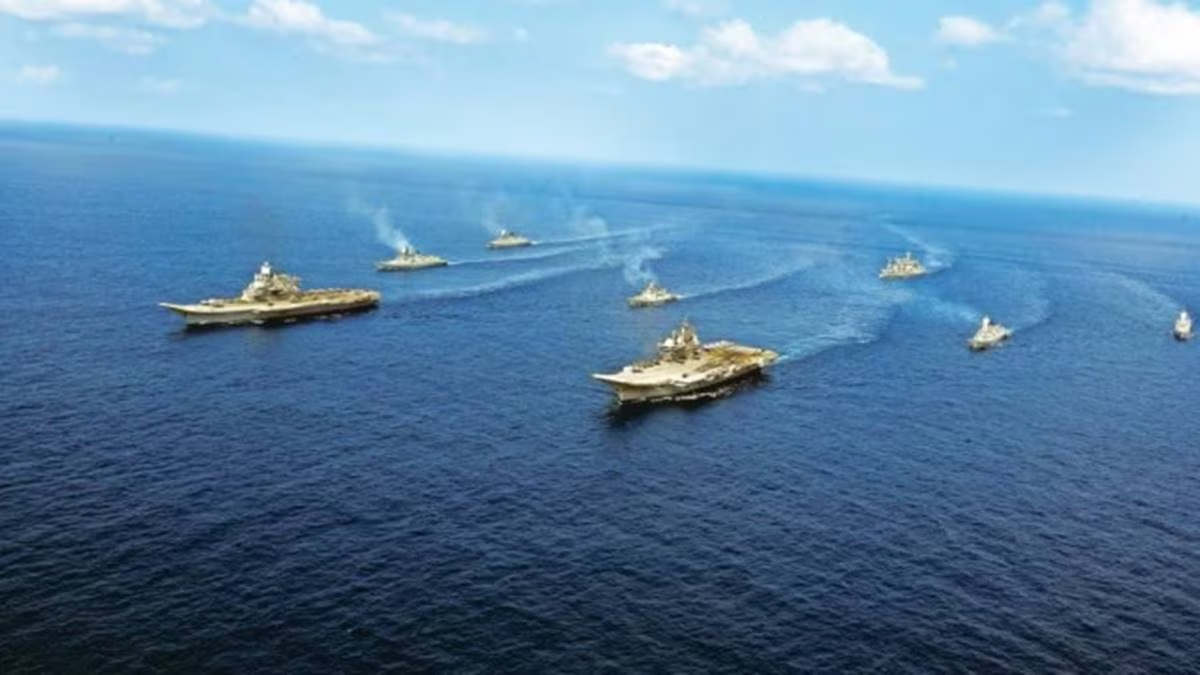
India’s maritime security has become a crucial pillar of national defence, especially in the strategically important Indo-Pacific region. With increasing global competition, sea-based trade routes, and evolving security challenges, the Indian Navy plays a vital role in safeguarding India’s interests.
For defence aspirants preparing at LWS SSB Interview Delhi, understanding maritime security is essential—not just for knowledge, but for performing confidently in SSB interviews, group discussions, and personal interviews.
What is Maritime Security?
Maritime security refers to the protection of:
- Sea lanes of communication (SLOCs)
- Coastal borders
- Maritime resources
- Trade routes and shipping
It ensures safe and secure movement across oceans, which is critical for India’s economy and defence.
Importance of the Indo-Pacific Region
The Indo-Pacific is one of the most strategically important regions in the world because:
- Over 60% of global trade passes through it
- It connects the Indian Ocean and Pacific Ocean
- It includes major global powers and naval forces
Why It Matters to India:
- Energy imports pass through these routes
- Trade dependency on sea routes
- Strategic competition in the region
Role of the Indian Navy in the Indo-Pacific
 1. Safeguarding Sea Lanes
The Indian Navy ensures the safety of:
- Merchant ships
- Oil tankers
- Trade routes
This is vital for India’s economic stability.
2. Anti-Piracy Operations
- Deployment in piracy-prone areas like the Gulf of Aden
- Protection of Indian and international vessels
3. Maritime Surveillance & Intelligence
- Monitoring suspicious activities
- Using advanced radar and satellite systems
4. Humanitarian Assistance & Disaster Relief (HADR)
- Rescue operations during natural disasters
- Assistance to neighboring countries
5. Strategic Partnerships & Exercises
India actively participates in:
- Naval exercises with friendly countries
- Indo-Pacific partnerships
Enhances global cooperation and defence readiness.
6. Power Projection
- Deployment of aircraft carriers
- Submarine operations
- Strengthening India’s presence in the region
Challenges in Maritime Security
- Rising geopolitical tensions
- Piracy and maritime terrorism
- Illegal fishing and smuggling
- Cyber threats in naval systems
These challenges make maritime awareness critical for future officers.
Importance for SSB Interview Preparation
At the SSB Interview, candidates are often assessed on:
- Awareness of national security issues
- Opinion on Indo-Pacific strategy
- Knowledge of Indian Navy operations
Common Questions:
- What is Indo-Pacific strategy?
- Role of Indian Navy in maritime security?
- Why is sea power important for India?
Strong answers reflect officer-like awareness, clarity, and confidence.
How LWS SSB Interview Delhi Prepares You
At LWS SSB Interview Delhi, aspirants are trained to handle such topics effectively:
- Current Affairs & Defence Awareness
- In-depth discussions on Indo-Pacific and maritime security
- Daily updates on defence topics
2. Group Discussion & GTO Practice
- Real GD topics based on current issues
- Improves communication & leadership
3. Personal Interview Training
- Structured answers for defence-related questions
- Guidance from experienced assessors
4. Expert Mentorship
- Training by ex-SSB assessors
- Real insights into SSB expectations
Why LWS is the Best Choice for SSB Preparation
- Real SSB assessors
- 5-day SSB simulation
- Focus on current affairs
- Personalized feedback
- Proven results
LWS ensures you are fully prepared for both knowledge and personality aspects of SSB.
Conclusion
India’s maritime security and the role of the Indian Navy in the Indo-Pacific are critical topics for defence aspirants.
For students at LWS SSB Interview Delhi, mastering such subjects helps:
1. Perform better in SSB interviews
2. Develop strategic thinking
3. Build officer-like qualities
The oceans are the future battleground—and future officers must be ready to lead.