Clearing the written examination is only one part of the journey for defence aspirants. For candidates preparing for the SSB Interview, the focus needs to go beyond academic knowledge and memorised answers. The SSB assessment is designed to understand a candidate’s personality, behaviour, communication, teamwork, leadership potential, decision-making and overall suitability for an officer’s role.
This is why Officer Like Qualities for SSB should become an important part of every aspirant’s preparation strategy. Rather than trying to display certain qualities artificially during the selection process, candidates should work on developing them through regular practice, real-life experiences, teamwork and self-improvement.
LWS SSB Interview follows an OLQ-centric approach to SSB preparation. The objective is to help aspirants understand the qualities expected during the selection process and develop them through practical activities, communication exercises, GTO-oriented training, mock interviews, self-analysis and feedback.
What Are Officer Like Qualities?
Officer Like Qualities, commonly referred to as OLQs, are a group of attributes associated with effective leadership, responsible behaviour, teamwork, decision-making and social interaction.
During SSB, candidates participate in different activities that allow assessors to observe various aspects of their personality. This means that candidates should not think of OLQs as something that can be demonstrated through one particular answer.
Instead, OLQ Development should be viewed as a continuous process involving:
- Self-awareness
- Communication
- Leadership
- Teamwork
- Decision-making
- Responsibility
- Initiative
- Confidence
- Problem-solving
- Social adaptability
Why Officer Like Qualities Matter in SSB
The SSB process involves multiple activities rather than a single examination. Candidates may have to participate in screening, psychological tests, group activities, GTO tasks and a Personal Interview.
Each activity provides an opportunity to observe different aspects of a candidate’s personality. Therefore, attempting to prepare a separate answer for every possible situation is not an effective long-term strategy.
Instead, candidates should focus on developing qualities that can naturally reflect through their actions and communication.
SSB Preparation Should Be More Than Memorising Answers
One of the most common mistakes candidates make during SSB Interview Preparation is memorising answers. Candidates may prepare standard responses for interview questions, psychological tests or group discussions.
Although understanding the format of different tests is useful, excessive dependence on memorised responses can make a candidate’s behaviour artificial.
Effective SSB preparation should focus on:
- Understanding yourself
- Developing clear communication
- Improving reasoning ability
- Practising teamwork
- Taking responsibility
- Developing leadership skills
- Improving decision-making
- Building confidence
- Learning from mistakes
- Accepting constructive feedback
Important Officer Like Qualities for SSB
OLQ development covers several areas that aspirants should understand and work on consistently. These qualities are not developed overnight. They require regular practice and real-life application.
Some important areas include:
- Effective Intelligence
- Reasoning Ability
- Organising Ability
- Social Adaptability
- Cooperation
- Sense of Responsibility
- Initiative
- Self-Confidence
- Speed of Decision
- Ability to Influence the Group
- Determination
- Courage
- Stamina
Effective Intelligence
Effective intelligence involves the ability to understand situations and apply knowledge practically. A candidate may have excellent theoretical knowledge, but SSB preparation should also develop the ability to use that knowledge when faced with a practical problem.
You can develop this quality by solving problems regularly and exposing yourself to situations that require practical thinking.
Try to:
- Analyse real-life problems
- Practise reasoning questions
- Participate in group planning exercises
- Think about multiple solutions to a problem
- Learn from practical experiences
GTO activities and group exercises can provide useful opportunities to apply knowledge in practical situations.
Reasoning Ability
Reasoning ability helps candidates analyse information and reach logical conclusions. It can be developed through regular practice rather than last-minute preparation.
Include activities such as logical reasoning, puzzles, situation-based questions and group planning exercises in your routine.
During SSB Psychology Preparation, candidates should also practise analysing situations quickly and responding logically within the available time.
Organising Ability
Organising ability involves planning tasks, managing available resources and working towards a defined objective.
Students and working professionals can develop this quality in everyday life by taking responsibility for projects, managing schedules and completing tasks systematically.
Useful habits include:
- Planning your daily schedule
- Setting realistic priorities
- Managing study and fitness routines
- Organising group activities
- Completing responsibilities on time
Group planning and GTO-oriented exercises can further help candidates practise organising information and resources under time constraints.
Social Adaptability
Defence professionals often work with people from different regions, backgrounds and cultures. Social adaptability is therefore an important area of personality development.
Candidates can improve social adaptability by interacting with different people, listening to different perspectives and learning to work comfortably in unfamiliar environments.
Participate in:
- Group discussions
- Team sports
- College activities
- Community activities
- Group projects
- Outdoor activities
The objective is to become comfortable working with people who may have different opinions and approaches.
Cooperation and Teamwork
Leadership does not mean dominating a group. An effective team member should also know how to cooperate, listen and contribute towards a common objective.
SSB Leadership Training should therefore include situations where candidates have to work together rather than simply compete against one another.
Develop cooperation by:
- Listening to teammates
- Sharing useful ideas
- Helping others when required
- Respecting different opinions
- Accepting constructive criticism
- Working towards common goals
Sense of Responsibility
Responsibility is developed through action. Candidates should learn to take ownership of their commitments rather than waiting for someone else to solve every problem.
Start with simple responsibilities in your daily life. Complete assignments on time, maintain your routine, help with household responsibilities and take ownership of tasks assigned to you.
These habits can contribute to long-term personality development and self-discipline.
Initiative
Initiative means being willing to take constructive action without always waiting for someone else to provide instructions.
Students can develop initiative by:
- Volunteering for responsibilities
- Starting useful projects
- Taking the lead in group activities
- Finding solutions to problems
- Helping teammates when appropriate
During GTO activities, candidates may encounter situations where taking initiative can contribute positively to the group’s progress.
Self-Confidence
Self-confidence is different from overconfidence. A confident candidate can communicate clearly, accept mistakes and continue working towards a solution.
Confidence can be developed through preparation and repeated exposure to challenging situations.
To improve confidence:
- Practise speaking regularly
- Participate in group discussions
- Take mock interviews
- Participate in sports or outdoor activities
- Set achievable goals
- Review your progress regularly
LWS SSB Interview uses practical activities and mock environments to help candidates become more comfortable with the SSB experience.
Speed of Decision-Making
Defence environments can require individuals to make decisions while dealing with limited information and time. Candidates can develop decision-making skills by practising situation-based problems.
Ask yourself:
- What is the actual problem?
- What information is available?
- What options do I have?
- What are the possible consequences?
- Which solution is practical?
Regular situation-based practice can help improve the ability to analyse information and make decisions without unnecessary hesitation.
Ability to Influence the Group
Influencing a group does not mean forcing everyone to agree with you. Positive influence involves communicating useful ideas, listening to others and helping the group move towards a practical solution.
During group discussions and GTO activities, practise:
- Communicating clearly
- Supporting useful ideas
- Providing logical suggestions
- Listening to teammates
- Encouraging constructive participation
A candidate who can contribute meaningfully while respecting others can become a more effective team member and leader.
Determination
Determination is the ability to continue working towards an objective even when challenges arise.
You can develop determination by setting realistic long-term goals and maintaining consistency even when immediate results are not visible.
For defence aspirants, preparation itself can become an exercise in determination. Maintaining a study routine, fitness schedule and regular practice requires discipline over an extended period.
Courage
Courage is not simply the absence of fear. It involves taking responsible action despite uncertainty or difficulty.
Candidates can develop courage by gradually stepping outside their comfort zone, taking responsibility and learning to handle challenging situations calmly.
Public speaking, outdoor activities, team responsibilities and challenging personal goals can provide opportunities to develop confidence and courage.
Stamina and Physical Fitness
Physical fitness contributes to an active and disciplined lifestyle. Candidates preparing for defence careers should maintain a consistent fitness routine instead of treating physical preparation as something to start immediately before selection.
A basic routine can include:
- Running or brisk walking
- Push-ups
- Squats
- Core exercises
- Mobility exercises
- Stretching
- Outdoor sports
Start gradually and adjust your routine according to your current fitness level. Appropriate professional guidance should be considered when needed.
Develop OLQs Through Group Discussions
Group discussions are an excellent way to practise communication, cooperation, social adaptability and the ability to influence a group.
Instead of focusing only on speaking more than everyone else, concentrate on making meaningful contributions.
During practice:
- Listen carefully before responding
- Speak clearly and confidently
- Support your points with logic
- Respect different opinions
- Avoid unnecessary arguments
- Encourage constructive discussion
Regular group discussions can make candidates more comfortable with expressing their thoughts in front of others.
Develop OLQs Through GTO Tasks
GTO activities provide practical situations where candidates can work on teamwork, cooperation, initiative, planning, communication and leadership.
Practical GTO-oriented training can include:
- Group planning activities
- Progressive group tasks
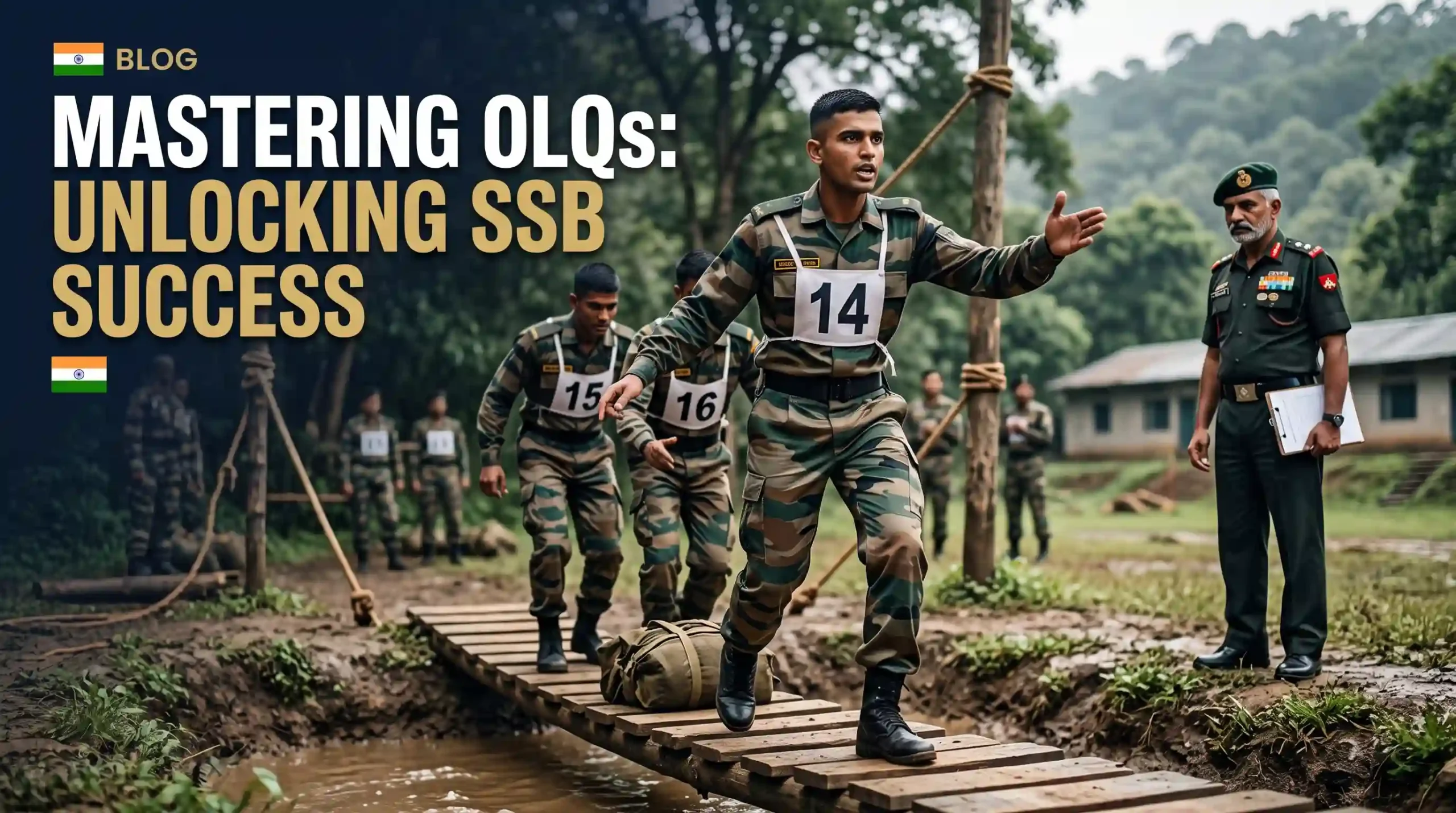
- Group obstacles
- Individual obstacles
- Command task-oriented exercises
- Lecturette
- Team-building activities
These activities should be used for learning and self-improvement rather than trying to perform a rehearsed personality.
Develop OLQs Through Leadership Exercises
Leadership develops through responsibility and action. Candidates should look for opportunities to lead small projects, organise activities and solve problems with a team.
Leadership exercises can help develop:
- Decision-making
- Planning
- Communication
- Responsibility
- Initiative
- Team coordination
- Confidence
Good leadership also involves listening to teammates and considering practical suggestions.
Communication Practice for SSB Personality Development
Communication is an important part of SSB Personality Development. Candidates should be able to express ideas clearly without trying to use unnecessarily complicated language.
Make communication practice part of your daily routine:
- Read quality news sources
- Speak about current topics
- Practise lecturette
- Participate in discussions
- Record yourself speaking
- Review your clarity and confidence
Focus on clear thinking and natural expression rather than trying to imitate another person’s speaking style.
Mock Interviews for OLQ Development
Mock interviews can help candidates become more comfortable discussing their education, family, interests, achievements, strengths, weaknesses and career goals.
More importantly, mock interviews can help candidates identify inconsistencies in their responses and areas where they need greater self-awareness.
A good mock interview should provide feedback on:
- Communication
- Confidence
- Clarity of thought
- Self-awareness
- Body language
- Knowledge of personal background
- Ability to answer naturally
Self-Analysis: The Foundation of OLQ Development
Before trying to improve your personality, understand your current strengths and weaknesses. Self-analysis allows candidates to create a realistic development plan.
Ask yourself:
- What are my strongest qualities?
- Where do I struggle?
- How do I behave in a group?
- How do I react to criticism?
- Do I take responsibility?
- How do I handle pressure?
- Do I listen to other people?
- How quickly can I make decisions?
- What habits do I need to change?
Honest answers to these questions can help candidates identify areas for improvement.
Real-Time Feedback for Continuous Improvement
Self-analysis becomes even more useful when combined with feedback from experienced mentors and peers. Sometimes candidates are unaware of habits that are obvious to others.
Feedback can help identify:
- Communication problems
- Over-dominating behaviour
- Lack of participation
- Hesitation
- Poor listening
- Weak leadership
- Unclear expression
- Inconsistent responses
LWS SSB Interview focuses on practical activities and feedback to help candidates understand their individual strengths and weaknesses.
The LWS Approach to Officer Like Qualities for SSB
LWS SSB Interview follows an expert-led, SSB-focused and OLQ-centric approach. The objective is not to provide candidates with shortcuts but to create opportunities for practical learning and personality development.
The LWS approach combines:
- Expert-led SSB training
- Psychology preparation
- Practical GTO exposure
- Group discussions
- Leadership exercises
- Mock interviews
- Communication practice
- Personality development
- Individual feedback
- OLQ-focused mentorship
This approach allows candidates to understand how different qualities can be developed through practical situations rather than simply memorising definitions.
Why Practical Training Is Important for OLQ Development
You cannot develop teamwork simply by reading about teamwork. Similarly, leadership cannot be learned only by memorising leadership qualities.
Practical activities provide situations where candidates have to communicate, cooperate, make decisions and take responsibility.
This is why aspirants looking for the Best SSB Coaching in India should evaluate whether an institute provides meaningful practical exposure and individual feedback.
OLQ Development Through Outdoor Activities
Outdoor activities can provide valuable opportunities for teamwork, stamina, confidence and problem-solving. Sports and group activities can also teach candidates how to handle competition, success, failure and pressure.
Consider participating regularly in:
- Team sports
- Running
- Outdoor games
- Adventure activities where appropriate
- Group fitness activities
The objective is not to become an elite athlete but to develop an active, disciplined and resilient lifestyle.
OLQ Development Is a Daily Process
Candidates should not wait until their SSB date to begin personality development. OLQs are developed through everyday behaviour and consistent habits.
Simple daily actions can contribute to development:
- Arriving on time
- Completing responsibilities
- Helping teammates
- Listening before responding
- Taking initiative
- Maintaining physical fitness
- Reading regularly
- Learning from mistakes
- Accepting feedback
- Maintaining discipline
Common Mistakes in OLQ Preparation
Many candidates misunderstand OLQ development and try to create an artificial personality for the SSB Interview.
Avoid these mistakes:
- Memorising definitions of OLQs
- Trying to act like another candidate
- Preparing fake stories for interviews
- Dominating every group discussion
- Trying to display leadership unnecessarily
- Ignoring teamwork
- Giving rehearsed psychology responses
- Ignoring individual feedback
- Starting personality development only before SSB
Instead, focus on genuine self-improvement and consistent behaviour.
How LWS Can Help With SSB Personality Development
LWS SSB Interview provides structured preparation for aspirants who want to understand the SSB process while working on their overall personality.
The preparation approach includes practical exposure to different SSB-related activities and opportunities to receive feedback from mentors.
LWS focuses on:
- SSB Interview Preparation
- Psychology Preparation
- GTO-oriented practical training
- Mock Personal Interviews
- Group Discussions
- Communication Development
- Leadership Development
- Personality Development
- Officer Like Qualities
- Individual Performance Feedback
Who Should Focus on OLQ Development?
Every aspirant preparing for an officer-entry selection process can benefit from working on OLQs. Whether you are preparing through NDA, CDS, AFCAT or another applicable pathway, personality development should be treated as a long-term preparation activity.
OLQ development is particularly useful for:
- NDA aspirants
- CDS aspirants
- AFCAT aspirants
- First-time SSB candidates
- Repeat SSB candidates
- Candidates who lack group-discussion experience
- Aspirants looking to improve confidence
- Candidates seeking structured SSB mentorship
A Simple Weekly OLQ Development Plan
Candidates can create a weekly routine that combines communication, physical activity, teamwork and self-analysis.
- Monday: Current-affairs discussion and reasoning practice
- Tuesday: Speaking practice and physical training
- Wednesday: Group discussion and self-analysis
- Thursday: Psychology practice and communication exercises
- Friday: Team activity or sports
- Saturday: Mock interview or GTO-oriented practice
- Sunday: Weekly performance review and improvement planning
The routine can be adjusted according to your academic schedule, fitness level and SSB preparation requirements.
Why Choose LWS for OLQ-Centric SSB Preparation?
Choosing the Best SSB Coaching in India should involve more than comparing fees or classroom facilities. Aspirants should understand whether the institute provides practical training, experienced mentorship, realistic activities and meaningful feedback.
LWS SSB Interview focuses on developing candidates through an integrated approach involving psychology, GTO, interviews, group activities, communication and personality development.
The aim is simple: help candidates understand themselves, improve their weaknesses and develop the qualities needed to approach the SSB process with confidence.
Start Developing Your Officer Like Qualities With LWS
Officer Like Qualities for SSB cannot be developed through a single lecture or a list of memorised answers. They develop through consistent habits, real-life experiences, teamwork, responsibility, communication, leadership and self-analysis.
If you are preparing for the SSB Interview, start working on your personality long before your selection date. Participate in group activities, take responsibility, improve your communication, maintain physical fitness and learn from constructive feedback.
LWS SSB Interview provides an expert-led and OLQ-centric preparation environment with practical GTO training, psychology guidance, mock interviews, group activities and individual feedback.
If you are looking for SSB Coaching in India or the Best SSB Coaching in India, choose a preparation approach that focuses not only on clearing the process but also on developing you as a confident, responsible and capable individual.
Build your personality. Develop your Officer Like Qualities. Prepare for SSB with LWS SSB Interview.
Frequently Asked Questions About Officer Like Qualities for SSB
What are Officer Like Qualities for SSB?
Officer Like Qualities are attributes associated with effective leadership, teamwork, responsibility, decision-making, communication and social adaptability. Candidates should focus on developing these qualities naturally rather than memorising their definitions.
Can OLQs be developed?
Yes. Many aspects of personality can be improved through consistent practice, real-life responsibilities, group activities, communication exercises, leadership opportunities, physical activities, self-analysis and constructive feedback.
How can I improve my OLQs for SSB?
Participate in group discussions, sports and team activities, take responsibility, practise communication, attempt mock interviews, work on decision-making and regularly analyse your strengths and weaknesses.
Does SSB Psychology Preparation help with OLQ development?
Psychology preparation can help candidates understand the nature of psychological assessments and become comfortable responding under time constraints. However, candidates should focus on natural and consistent responses rather than memorising answers.
Why is practical training important for OLQ development?
Practical situations allow candidates to experience teamwork, leadership, decision-making and communication rather than simply reading about these qualities. GTO tasks, group discussions, mock interviews and team exercises can provide useful opportunities for development.
Why choose LWS SSB Interview for OLQ development?
LWS SSB Interview follows an expert-led, SSB-focused and OLQ-centric approach that combines psychology preparation, practical GTO training, group activities, mock interviews, communication development and individual feedback.