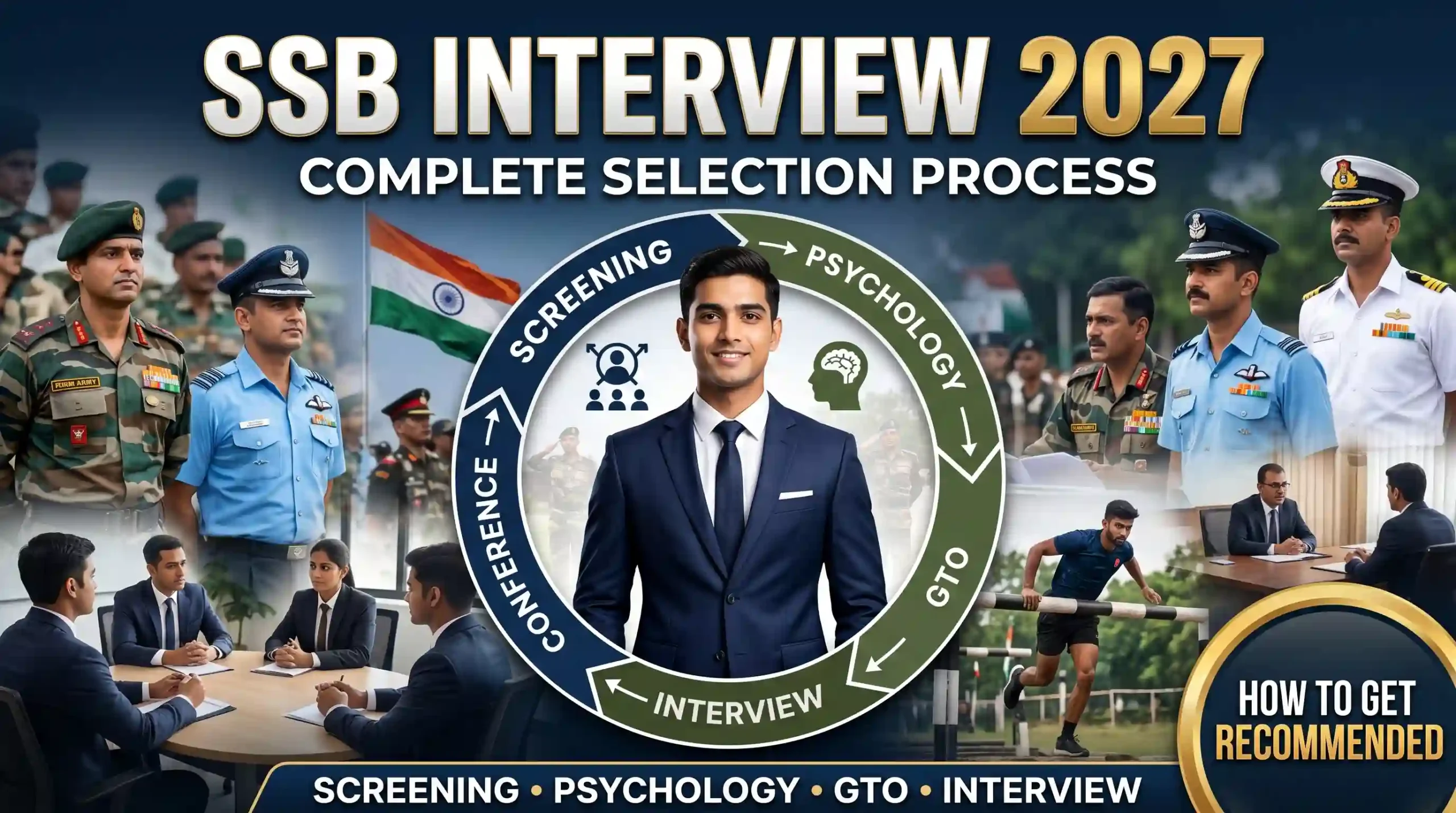
The SSB Interview 2027 is one of the most important stages in the selection process for candidates aspiring to join the Indian Armed Forces through NDA, CDS, AFCAT, TES, NCC Special Entry, SSC-Tech, and other officer-entry schemes. While clearing the written examination is a significant achievement, final selection depends largely on performance in the Services Selection Board (SSB) assessment.
Unlike traditional interviews, the SSB evaluates a candidate’s personality, leadership potential, decision-making ability, communication skills, and Officer Like Qualities (OLQs). Every year, thousands of candidates appear for SSB interviews, but only a small percentage receive recommendations.
In this complete guide, LWS SSB Interview explains the entire SSB Selection Process, including Screening, Psychology Tests, GTO Tasks, Personal Interview, Conference, and proven preparation strategies.
What is the SSB Interview?
The Services Selection Board (SSB) Interview is a comprehensive personality assessment conducted by the Indian Army, Navy, and Air Force to identify candidates suitable for officer roles.
The process is designed to assess whether a candidate possesses the Officer Like Qualities required to lead troops, make decisions under pressure, and handle responsibilities in military environments.
- Leadership Ability
- Communication Skills
- Decision-Making Capability
- Teamwork and Cooperation
- Confidence and Initiative
- Emotional Stability
- Responsibility and Integrity
SSB Interview Duration
The complete SSB assessment generally lasts for five days and involves multiple tests conducted by trained assessors.
- Day 1 – Screening Test
- Day 2 – Psychology Tests
- Day 3 & 4 – GTO Tasks and Personal Interview
- Day 5 – Conference
Day 1: Screening Test
The Screening Test is the first stage of the SSB process. Candidates who fail this stage are sent back on the same day.
Officer Intelligence Rating (OIR) Test
The OIR Test evaluates reasoning ability, logical thinking, and intelligence.
- Verbal Reasoning
- Non-Verbal Reasoning
- Analytical Thinking
- Problem Solving
Picture Perception and Discussion Test (PPDT)
Candidates are shown a picture for a few seconds and asked to write a story based on their perception. Afterward, group discussions are conducted where candidates narrate and discuss their stories.
The assessors observe:
- Communication Skills
- Confidence
- Observation Ability
- Group Behaviour
- Leadership Traits
Day 2: Psychology Tests
The Psychology Tests are designed to assess a candidate’s subconscious thinking patterns, personality traits, and natural responses.
1. Thematic Apperception Test (TAT)
Candidates view a series of pictures and write stories based on them.
The stories should demonstrate:
- Positive Thinking
- Problem Solving
- Leadership
- Responsibility
2. Word Association Test (WAT)
A word appears on the screen for a few seconds, and candidates must write the first meaningful thought that comes to mind.
The objective is to evaluate spontaneous thinking and personality traits.
3. Situation Reaction Test (SRT)
Candidates respond to practical situations that test decision-making ability and presence of mind.
- Quick Thinking
- Practical Judgment
- Responsibility
- Initiative
4. Self Description Test (SDT)
Candidates write about themselves from the perspective of parents, teachers, friends, and their own self-assessment.
This test evaluates self-awareness and personality consistency.
Day 3 & 4: Group Testing Officer (GTO) Tasks
The GTO series evaluates leadership, teamwork, planning, cooperation, and practical intelligence.
Group Discussion (GD)
- Current Affairs Topics
- Social Issues
- National Importance Topics
Candidates should focus on logical arguments rather than dominating the discussion.
Group Planning Exercise (GPE)
Teams analyze a given problem and formulate practical solutions within a limited timeframe.
Progressive Group Task (PGT)
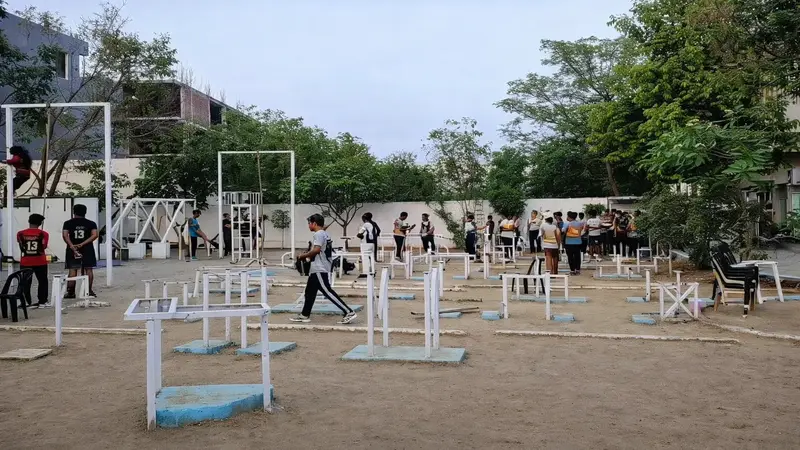
Groups solve outdoor obstacles using teamwork, planning, and available resources.
Half Group Task (HGT)
Similar to PGT but conducted with a smaller group, allowing assessors to observe individual contributions more closely.
Individual Obstacles (IO)
Candidates complete physical obstacles within a specified time limit.
This task assesses:
- Courage
- Determination
- Physical Fitness
- Confidence
Command Task
Candidates act as commanders and lead teammates in solving a given obstacle.
This task is one of the most important leadership assessments in the SSB process.
Lecturette
Candidates speak on a topic for a few minutes before the group.
This evaluates:
- Communication Skills
- Confidence
- Knowledge
- Presentation Ability
Day 3 or 4: Personal Interview
The Personal Interview is conducted by the Interviewing Officer (IO) and focuses on understanding the candidate’s personality, background, achievements, interests, and aspirations.
Common areas include:
- Family Background
- Academic Performance
- Hobbies and Interests
- Current Affairs
- General Awareness
- Career Goals
The key to success is honesty, confidence, and natural responses.
Day 5: Conference
The Conference is the final stage of the SSB Interview process.
All assessors discuss each candidate’s performance before making the final recommendation decision.
The conference generally lasts a few minutes, although borderline cases may receive longer discussions.
Officer Like Qualities (OLQs) Assessed in SSB
- Effective Intelligence
- Reasoning Ability
- Initiative
- Self Confidence
- Responsibility
- Determination
- Courage
- Communication Skills
- Team Spirit
- Leadership
- Social Adaptability
- Decision Making Ability
Common Reasons Candidates Get Rejected
- Lack of Self-Awareness
- Artificial Behaviour
- Poor Communication Skills
- Negative Thinking
- Insufficient Current Affairs Knowledge
- Lack of Confidence
- Weak Team Participation
How to Clear SSB Interview 2027?
Success in SSB is not about memorizing answers. It requires personality development and consistent preparation.
- Improve Communication Skills.
- Develop Leadership Qualities.
- Stay Updated with Current Affairs.
- Practice Psychology Tests.
- Participate in Group Activities.
- Maintain Physical Fitness.
- Build Confidence Through Mock Interviews.
Why Choose LWS SSB Interview Preparation?
LWS SSB Interview provides specialized training designed to help aspirants perform confidently across every stage of the SSB process.
- Comprehensive SSB Preparation Programs.
- Experienced Defence Mentors.
- Psychology Test Practice Sessions.
- GTO Task Guidance.
- Personal Interview Training.
- Mock SSB Assessments.
- Communication & Personality Development.
- Current Affairs and Lecturette Preparation.
- Individual Feedback and Mentorship.
Whether you are preparing through NDA, CDS, AFCAT, TES, NCC, SSC-Tech, or any other officer-entry route, LWS SSB Interview provides the expert guidance and structured training needed to improve your recommendation chances.
Conclusion
The SSB Interview 2027 is not merely an interview—it is a comprehensive assessment of your personality, leadership potential, and suitability to become an officer in the Indian Armed Forces. Understanding every stage of the selection process and preparing systematically can significantly improve your chances of success.
If your goal is to earn an SSB recommendation and wear the uniform with pride, begin your preparation early and focus on developing genuine Officer Like Qualities. With expert mentorship, realistic mock assessments, and personalized guidance from LWS SSB Interview, you can confidently move closer to achieving your defence career dream.