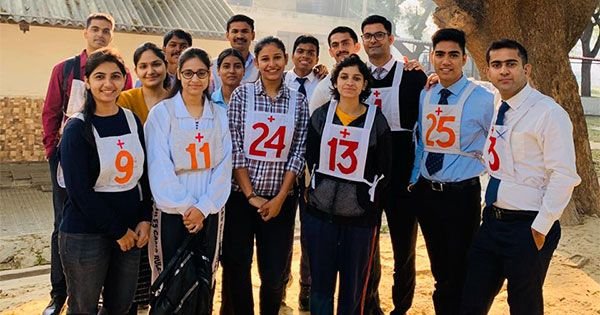
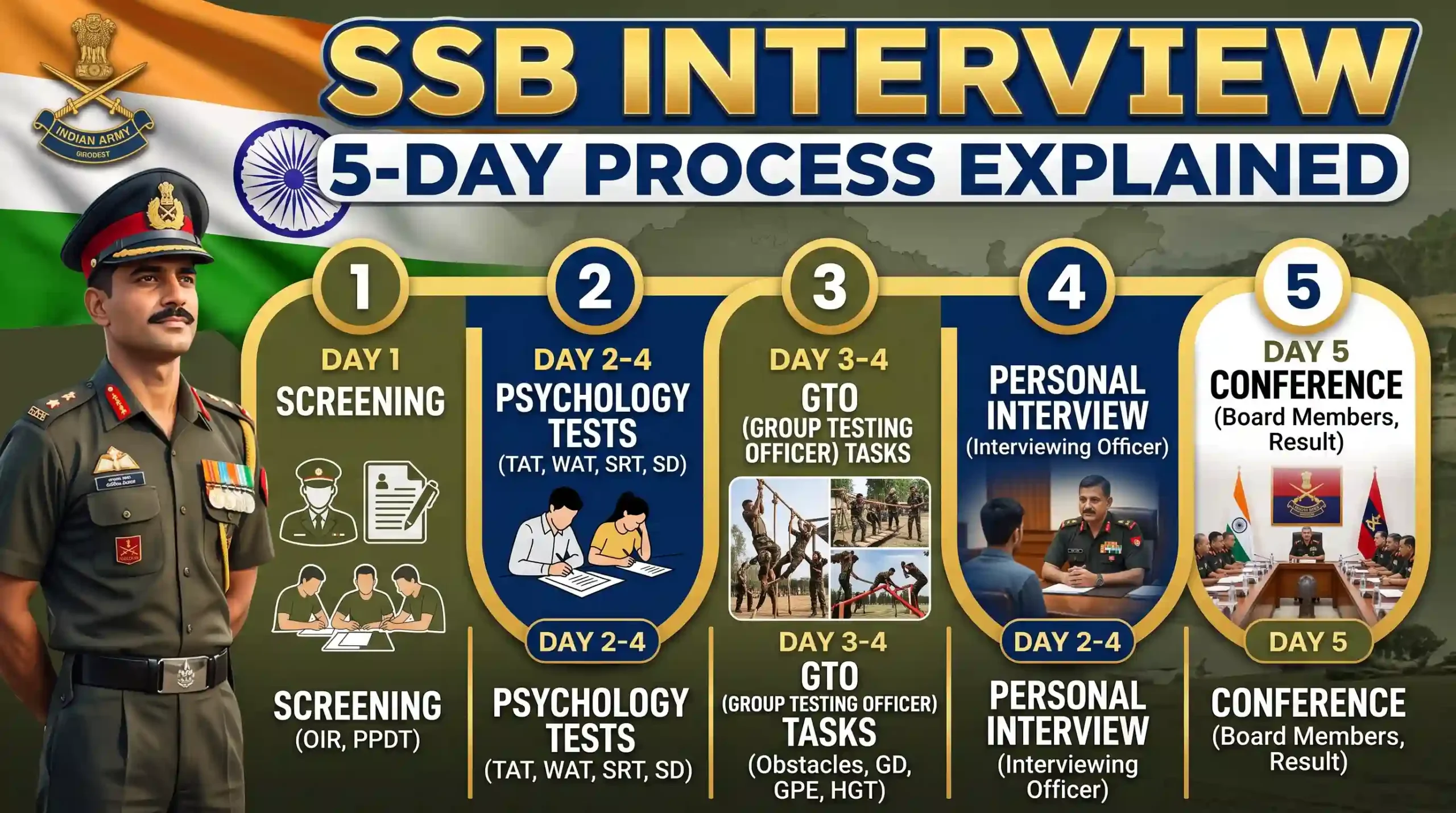
The SSB Interview 5-Day Process is one of the most comprehensive personality assessment systems in the world. Conducted by the Services Selection Board (SSB), this five-day evaluation is designed to identify candidates who possess the potential to become officers in the Indian Armed Forces. Unlike a traditional interview, the SSB assesses your personality, leadership abilities, decision-making skills, communication, teamwork, and Officer Like Qualities (OLQs).
Whether you are appearing for the NDA, CDS, AFCAT, TES, INET, or other officer entry schemes, understanding the complete SSB Interview Process is essential for success. In this guide, we explain each day of the selection procedure in detail and share practical preparation tips from the experts at LWS SSB Interview.
Introduction to the SSB Interview
The Services Selection Board follows a scientific evaluation system where candidates are assessed by three independent assessors:
- Psychologist
- Group Testing Officer (GTO)
- Interviewing Officer (IO)
Each assessor observes different aspects of your personality over five days. Instead of testing memorized knowledge, the SSB focuses on your natural behaviour, leadership potential, emotional stability, social adaptability, and ability to perform under pressure.
The complete SSB Selection Procedure consists of:
- Day 1 – Screening Test
- Day 2 – Psychology Tests
- Days 3 & 4 – GTO Tasks and Personal Interview
- Day 5 – Conference
Day 1: Screening Test (OIR & PPDT)
The first day is known as the Screening Stage. It is one of the most crucial phases because only shortlisted candidates proceed to the remaining four days of assessment.
Officer Intelligence Rating (OIR) Test
The OIR Test evaluates your logical reasoning, verbal ability, non-verbal reasoning, analytical thinking, and problem-solving skills.
The test generally includes questions on:
- Verbal Reasoning
- Non-Verbal Reasoning
- Series Completion
- Coding-Decoding
- Analogies
- Pattern Recognition
- Logical Analysis
Accuracy and time management are equally important in this test.
Picture Perception and Discussion Test (PPDT)
In the PPDT, candidates are shown a blurred picture for a short duration. They must observe it carefully and write a story based on their perception. After writing the story, candidates narrate it before the group and participate in a group discussion.
The assessors evaluate:
- Observation skills.
- Imagination and practical thinking.
- Communication ability.
- Confidence.
- Leadership potential.
- Teamwork during discussion.
After completing both OIR and PPDT, the screening results are announced. Only shortlisted candidates move to Stage II of the SSB Interview.
Day 2: Psychology Tests (TAT, WAT, SRT & SD)
The second day focuses entirely on psychological assessment. These tests evaluate your subconscious personality traits and natural responses rather than academic knowledge.
Thematic Apperception Test (TAT)
Candidates are shown a series of pictures and asked to write stories within a limited time. Assessors evaluate how you perceive situations, solve problems, and demonstrate leadership qualities.
Tips for TAT:
- Write realistic and positive stories.
- Keep the central character solution-oriented.
- Demonstrate responsibility and initiative.
- Avoid unrealistic heroism.
Word Association Test (WAT)
Individual words are displayed one after another. Candidates must write the first meaningful thought that comes to mind.
Assessors observe:
- Positive thinking.
- Emotional maturity.
- Decision-making ability.
- Social awareness.
Situation Reaction Test (SRT)
Candidates are presented with everyday situations and must write how they would respond.
The focus is on:
- Practical thinking.
- Decision-making.
- Sense of responsibility.
- Problem-solving ability.
Self Description Test (SD)
Candidates write about themselves based on their own opinion and feedback from parents, teachers, friends, and personal aspirations.
Be honest and maintain consistency throughout your responses.
Days 3 & 4: GTO Tasks and Personal Interview
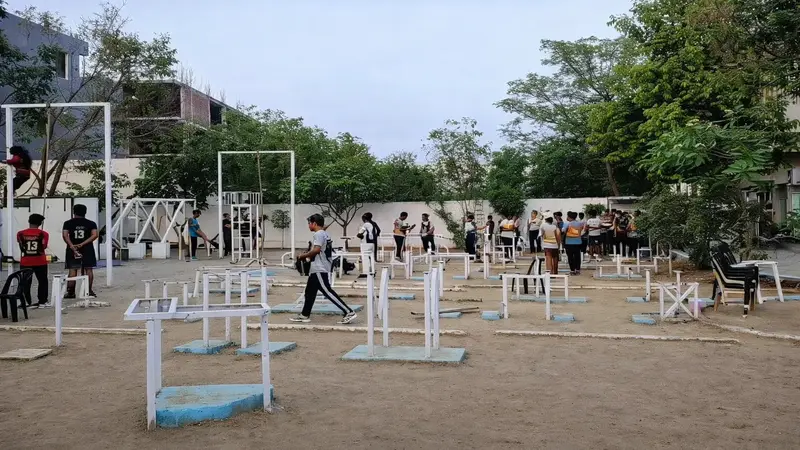
The third and fourth days involve outdoor group activities conducted by the Group Testing Officer along with the Personal Interview, which may be scheduled on either day depending on the board.
Group Discussion (GD)
Candidates discuss current affairs and social issues in groups.
- Speak confidently.
- Listen respectfully.
- Support logical arguments with facts.
- Do not dominate the discussion.
Group Planning Exercise (GPE)
A practical problem-solving activity where the group must analyze a situation and arrive at a common solution.
Assessors observe:
- Planning ability.
- Cooperation.
- Decision-making.
- Leadership.
Progressive Group Task (PGT)
Teams solve progressively challenging outdoor obstacles using helping materials within specified rules.
Half Group Task (HGT)
The group is divided into smaller teams, allowing assessors to observe each candidate more closely.
Group Obstacle Race (Snake Race)
One of the most energetic tasks where teamwork, enthusiasm, and coordination are tested while carrying a common load.
Lecturette
Candidates deliver a short speech on a randomly assigned topic.
Focus on:
- Confidence.
- Content organization.
- Communication skills.
- Time management.
Individual Obstacles
Candidates attempt various physical obstacles individually within a fixed time.
The task assesses:
- Physical fitness.
- Courage.
- Determination.
- Confidence.
Command Task
Each candidate acts as a commander and solves an obstacle with the help of selected teammates.
The assessors evaluate leadership, planning, communication, and resource utilization.
Final Group Task (FGT)
The concluding outdoor activity where the entire group works together to complete one final obstacle.
Personal Interview
The Interviewing Officer conducts an in-depth interaction to understand your personality, motivation, educational background, family, achievements, hobbies, and future goals.
Questions commonly relate to:
- Personal Information Questionnaire (PIQ).
- Family background.
- Education.
- Current Affairs.
- Defence awareness.
- Strengths and weaknesses.
- Career aspirations.
Day 5: Conference
The final day is the Conference. Every candidate appears before the complete assessment board consisting of the Psychologist, GTO, and Interviewing Officer.
The conference usually lasts only a few minutes, during which assessors verify their observations and may ask simple questions regarding your overall experience.
After the conference, the final recommendations are announced.
Officer Like Qualities (OLQs) Assessed Throughout the Process
During the entire SSB Interview 5-Day Process, assessors continuously observe Officer Like Qualities (OLQs).
- Effective Intelligence.
- Reasoning Ability.
- Planning and Organizing.
- Sense of Responsibility.
- Initiative.
- Self-Confidence.
- Decision-Making.
- Social Adaptability.
- Team Spirit.
- Leadership.
- Courage.
- Stamina.
- Communication Skills.
- Emotional Stability.
- Positive Attitude.
Expert Tips to Clear Every Stage
Success in the SSB Interview depends on natural personality development rather than memorized answers.
- Be honest and authentic.
- Develop Officer Like Qualities gradually.
- Read newspapers regularly.
- Improve communication skills.
- Stay physically fit.
- Practice Psychology Tests consistently.
- Participate actively in group activities.
- Maintain confidence without becoming overconfident.
- Know your PIQ thoroughly.
- Remain calm under pressure.
Why Choose LWS SSB Interview?
LWS SSB Interview provides one of the most comprehensive SSB preparation programs for NDA, CDS, AFCAT, TES, and other officer entry aspirants. The training is designed to develop genuine Officer Like Qualities through practical guidance from experienced defence professionals.
- Complete 5-Day SSB Interview simulation.
- Guidance from experienced defence mentors.
- Psychology Test practice (TAT, WAT, SRT & SD).
- GTO task training with practical exercises.
- Mock Personal Interviews.
- Lecturette and Group Discussion sessions.
- Officer Like Qualities (OLQ) development.
- Communication and personality development classes.
- Individual performance analysis.
- Regular mentoring and feedback to improve recommendation chances.
Conclusion
The SSB Interview 5-Day Process is designed to identify future military leaders through scientific personality assessment rather than academic testing. Understanding every stage, preparing consistently, and developing Officer Like Qualities naturally are the keys to success.
Whether you are appearing through NDA, CDS, AFCAT, or any other officer entry, disciplined preparation and expert mentorship can make a significant difference. With structured training, realistic practice, and continuous self-improvement, you can confidently face every stage of the SSB Interview and improve your chances of earning a recommendation.
Frequently Asked Questions (FAQs)
1. How many days does the SSB Interview process take?
The complete SSB Interview process is conducted over five days, including Screening, Psychology Tests, GTO Tasks, Personal Interview, and Conference.
2. What happens on Day 1 of the SSB Interview?
Day 1 includes the Officer Intelligence Rating (OIR) Test and the Picture Perception and Discussion Test (PPDT). Candidates who qualify move to the remaining stages.
3. Is the Personal Interview conducted on a fixed day?
No. The Personal Interview is usually scheduled on either Day 3 or Day 4, depending on the SSB board’s timetable.
4. What are Officer Like Qualities (OLQs)?
OLQs are the personality traits expected in future officers, such as leadership, responsibility, communication skills, teamwork, initiative, decision-making, and emotional stability.
5. Why should I choose LWS SSB Interview for preparation?
LWS SSB Interview offers expert mentoring, complete five-day simulation training, psychology test practice, GTO task guidance, mock interviews, personality development, and individual performance analysis to help aspirants maximize their chances of recommendation.