For defence aspirants, clearing the written examination is an important achievement, but it is only one part of the journey towards an officer-entry career. Candidates appearing through NDA, CDS and AFCAT pathways may have to face the Services Selection Board (SSB) selection process as part of their journey, depending on the applicable entry and current official requirements.
SSB Interview Preparation requires a different approach from conventional examination preparation. Instead of focusing only on books and memorised answers, candidates need to work on communication, teamwork, confidence, decision-making, self-awareness, leadership and Officer-Like Qualities.
This complete guide explains how first-time candidates can approach SSB Preparation for NDA, SSB Preparation for CDS and SSB Preparation for AFCAT. LWS SSB Interview can be a preparation partner for aspirants who want structured guidance, practical exposure and an OLQ-focused approach.
Understand the SSB Selection Process First
Before starting your preparation, understand what you are preparing for. SSB is not a single written test. Candidates participate in multiple activities designed to assess different aspects of their personality and suitability for officer-entry.
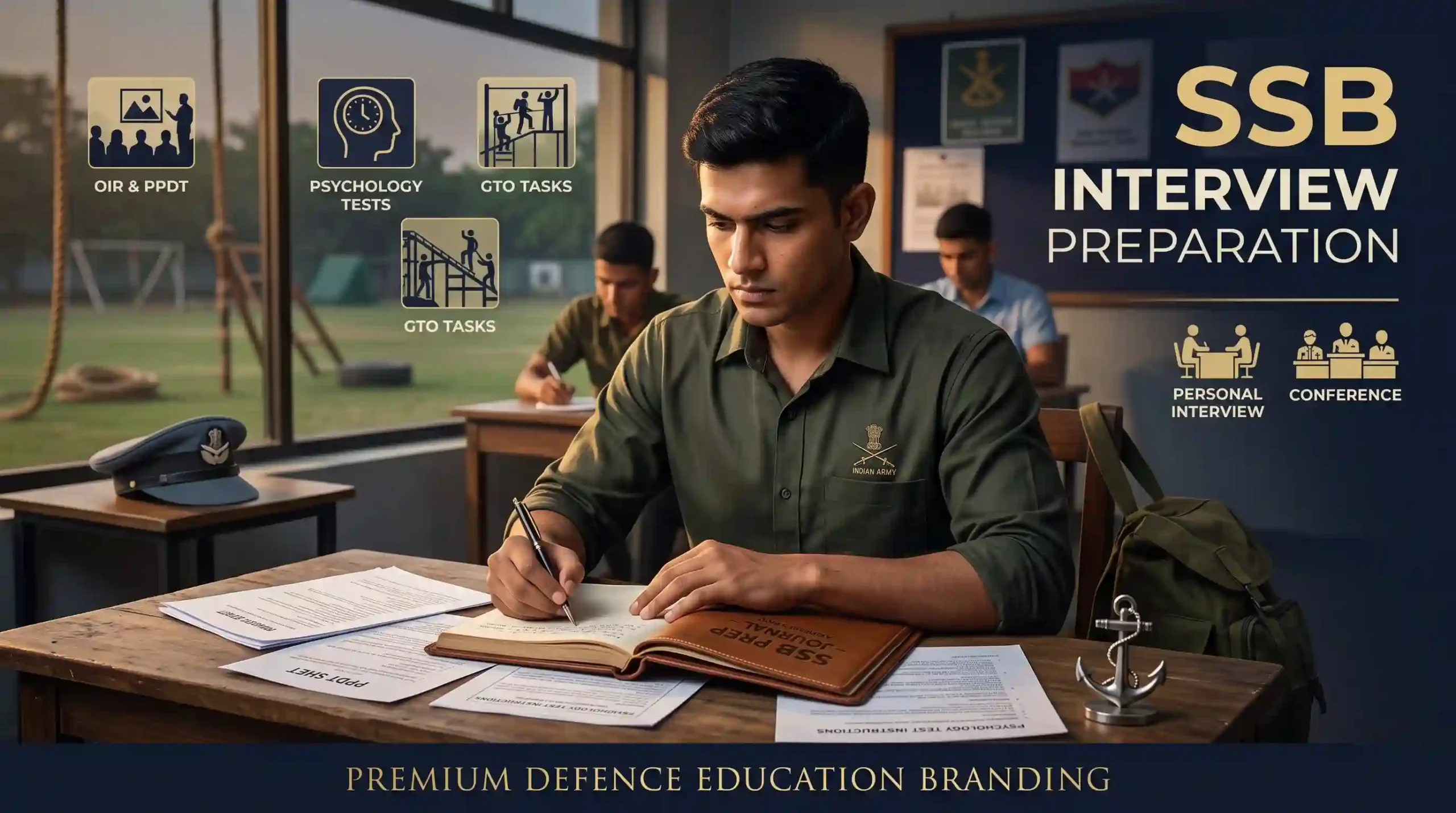
Your preparation should therefore cover the major areas associated with the selection process, including:
- Officer Intelligence Rating (OIR)
- Picture Perception and Discussion Test (PPDT)
- Psychological tests
- Group Testing Officer (GTO) activities
- Personal Interview
- Conference
LWS SSB Interview provides preparation around these major areas, allowing candidates to understand the assessment environment and practise different activities in a structured manner.
SSB Preparation for NDA
NDA is an important pathway for young aspirants who want to pursue a career as an officer in the Armed Forces. Candidates who qualify through the applicable NDA selection route need to prepare for the subsequent SSB stage.
NDA SSB Interview Preparation should begin with an understanding of the screening process and continue towards psychology, GTO activities and the Personal Interview.
NDA aspirants should particularly focus on:
- Basic reasoning and OIR practice
- PPDT practice
- Communication skills
- Group participation
- General awareness
- Confidence and self-awareness
- Leadership and teamwork
- Physical fitness
- Officer-Like Qualities
SSB Preparation for CDS
CDS aspirants generally enter the SSB process after completing the applicable written examination and meeting the requirements of their respective entry. As graduates, CDS candidates are expected to demonstrate maturity, awareness, confidence and responsibility during the selection process.
CDS SSB Preparation should therefore combine practical SSB training with strong self-awareness and communication.
CDS aspirants should work on:
- OIR and screening practice
- PPDT narration and discussion
- Psychological-test preparation
- GTO activities
- Personal Interview preparation
- Current-affairs awareness
- Communication and presentation
- Leadership and decision-making
- Self-awareness
SSB Preparation for AFCAT
AFCAT aspirants who are required to appear for the applicable Air Force selection process should understand the selection stages relevant to their entry and prepare accordingly.
AFCAT SSB Preparation should not be limited to the written examination. Candidates should also develop the communication, personality, teamwork and leadership qualities required during the selection process.
AFCAT aspirants can focus on:
- Screening and OIR preparation
- PPDT practice
- Psychology tests
- Group activities
- GTO-oriented preparation
- Personal Interview
- Communication skills
- Current affairs
- Physical fitness
- Officer-Like Qualities
Step 1: Prepare for OIR
The Officer Intelligence Rating test is associated with the screening stage. Candidates should become comfortable with reasoning-based questions and practise solving them accurately within the available time.
Regular practice can help improve:
- Verbal reasoning
- Non-verbal reasoning
- Logical thinking
- Observation
- Speed
- Accuracy
Do not focus only on solving questions slowly and correctly. Time management is also important. Include timed practice sessions in your SSB Interview Preparation routine.
Step 2: Master PPDT
Picture Perception and Discussion Test is another important part of the screening process. Candidates are required to perceive a picture, develop a story and participate in a group discussion.
PPDT preparation should focus on clear thinking and effective communication rather than memorising standard stories.
Practise:
- Observing the picture carefully
- Identifying relevant details
- Creating a logical and realistic story
- Writing within the available time
- Narrating confidently
- Listening to other candidates
- Participating constructively in discussion
Regular PPDT simulations can make candidates more comfortable with the process and help them identify communication or group-participation weaknesses.
Step 3: Understand TAT, WAT, SRT and SDT
The psychological assessment is an important component of SSB. Candidates should understand the purpose and format of the psychological tests rather than searching for fixed answers.
Important areas include:
- TAT: Thematic Apperception Test
- WAT: Word Association Test
- SRT: Situation Reaction Test
- SDT: Self Description Test
Effective psychology preparation should encourage candidates to respond naturally and consistently. Attempting to memorise ideal responses can make answers artificial and may create inconsistencies across different stages of the assessment.
Step 4: Improve Communication Skills
Communication is relevant throughout the SSB process. Candidates need to communicate during PPDT, group discussions, GTO activities, lecturette and the Personal Interview.
Good communication is not simply about speaking English fluently. It also involves listening, organising thoughts, understanding others and expressing ideas clearly.
To improve communication:
- Read newspapers and credible current-affairs sources regularly
- Discuss important topics with friends
- Practise speaking for a few minutes every day
- Participate in group discussions
- Practise lecturette topics
- Work on listening skills
- Focus on clarity rather than complicated vocabulary
Step 5: Practise Group Discussions
Group discussions provide an opportunity to demonstrate communication, cooperation, awareness and the ability to work with others.
A common mistake is believing that the most vocal candidate automatically performs best. Effective group participation involves contributing useful points while also listening to others.
During practice, work on:
- Speaking clearly
- Listening actively
- Respecting different opinions
- Adding relevant points
- Avoiding unnecessary arguments
- Maintaining confidence
- Encouraging constructive discussion
Step 6: Develop GTO Skills
GTO activities provide candidates with practical situations where teamwork, leadership, cooperation, initiative and problem-solving can be observed.
Reading about GTO tasks is not enough. Practical exposure can help candidates understand how to work within a group and respond when circumstances change.
GTO-oriented preparation may include:
- Group Discussion
- Group Planning activities
- Progressive Group Tasks
- Group Obstacles
- Individual Obstacles
- Command Task-oriented practice
- Lecturette
- Team-building exercises
LWS SSB Interview focuses on practical training so that aspirants can experience group situations instead of relying entirely on theoretical knowledge.
Step 7: Prepare for the Personal Interview
The Personal Interview is an opportunity for assessors to understand the candidate’s background, interests, experiences, goals and personality.
Questions can cover areas such as:
- Education
- Family
- Friends
- Hobbies
- Achievements
- Responsibilities
- Strengths and weaknesses
- Current affairs
- Career goals
- Life experiences
The best approach is to know yourself well rather than memorising answers from online lists.
Mock interviews can help candidates improve confidence, communication, body language and clarity of thought.
Step 8: Build Strong Self-Awareness
Self-awareness is extremely useful during SSB preparation. Candidates should be able to explain their educational choices, interests, achievements, responsibilities, strengths, weaknesses and future goals honestly.
Spend time reflecting on:
- Your academic performance
- Your hobbies and interests
- Your achievements
- Your responsibilities
- Your strengths
- Your weaknesses
- Your relationships with friends and family
- Your career objectives
- Your experiences and lessons learned
Aspirants should not try to create a fictional personality for SSB. Authenticity and consistency are more useful than rehearsed answers.
Step 9: Develop Officer-Like Qualities
One of the most important objectives of SSB Interview Preparation should be genuine personality development.
Candidates should work consistently on qualities associated with officer potential, including:
- Effective intelligence
- Reasoning ability
- Self-confidence
- Initiative
- Sense of responsibility
- Cooperation
- Leadership
- Decision-making
- Determination
- Social adaptability
- Teamwork
- Communication
LWS follows an OLQ-centric approach that focuses on developing these qualities rather than teaching candidates artificial tricks for clearing SSB.
Step 10: Improve Physical Fitness
Physical fitness is an important part of maintaining an active lifestyle and preparing for the demands associated with defence careers. Candidates should develop a consistent fitness routine rather than starting intense training immediately before their selection process.
A basic fitness routine may include:
- Running or brisk walking
- Bodyweight exercises
- Push-ups
- Squats
- Core exercises
- Stretching and mobility work
- Outdoor sports
Start gradually, maintain consistency and follow appropriate professional guidance when required.
Step 11: Take Mock SSB Tests
Mock SSB activities can help candidates understand how they perform under conditions similar to the actual selection environment.
A useful mock program should cover multiple areas rather than only conducting a Personal Interview.
Mock preparation can include:
- OIR practice
- PPDT simulation
- Psychology tests
- Group discussions
- GTO activities
- Lecturette
- Personal Interview
- Conference-oriented feedback
Repeated practice can help candidates become more comfortable and identify areas that require improvement.
Step 12: Analyse Your Weak Areas
Practice is useful only when candidates learn from their mistakes. After every mock activity, analyse what went well and what needs improvement.
Create a simple improvement checklist covering:
- Communication
- Confidence
- Group participation
- Leadership
- Time management
- Psychology responses
- Interview performance
- Current-affairs awareness
- Physical fitness
Regular analysis can turn preparation into a continuous improvement process.
Step 13: Avoid Memorised Responses
One of the most common mistakes in SSB Interview Coaching is depending too heavily on memorised answers.
Candidates may memorise sample TAT stories, WAT responses, SRT answers or Personal Interview responses. However, SSB involves multiple activities, and artificial responses can become difficult to maintain consistently.
Instead of memorising answers:
- Understand the purpose of each test
- Develop self-awareness
- Practise thinking under time pressure
- Improve communication
- Learn from feedback
- Respond naturally
- Develop genuine Officer-Like Qualities
Step 14: Prepare for the Conference
The conference is an important part of the overall SSB selection process. Candidates should understand that their performance is considered across different stages rather than based on one activity alone.
Instead of trying to predict conference questions or outcomes, candidates should focus on performing consistently throughout the selection process.
Good preparation should therefore begin from screening and continue through psychology, GTO and the Personal Interview.
How LWS SSB Interview Can Support Your Preparation
LWS SSB Interview focuses on providing structured and practical preparation for aspirants who want to understand and experience different aspects of the SSB selection process.
The LWS approach combines expert guidance with practical activities and an emphasis on Officer-Like Qualities.
Key preparation areas include:
- Screening and PPDT practice
- Psychology preparation
- GTO-oriented practical training
- Personal Interview preparation
- Mock SSB activities
- Communication development
- Personality development
- Individual feedback
- OLQ development
- Selection-oriented mentorship
Rather than treating SSB as a collection of tricks, LWS encourages candidates to understand the process and work on their individual strengths and weaknesses.
Why Choose LWS for SSB Interview Preparation?
Aspirants looking for the Best SSB Coaching in India should consider the experience of mentors, practical exposure, training methodology and feedback system before making a decision.
LWS SSB Interview provides an SSB-focused environment where candidates can practise different stages and receive guidance from experienced professionals.
The LWS preparation approach focuses on:
- Expert-led SSB training
- Practical GTO exposure
- Psychology-oriented guidance
- Realistic screening practice
- PPDT simulations
- Mock Personal Interviews
- Group activity practice
- Individual performance feedback
- Communication and personality development
- Officer-Like Qualities
A Practical Daily SSB Preparation Strategy
Consistency is more important than studying for extremely long hours for a few days. Candidates can create a balanced daily routine that includes academic preparation, current affairs, communication practice, fitness and SSB-specific activities.
A daily preparation routine can include:
- 30–45 minutes of current-affairs reading
- 30 minutes of OIR or reasoning practice
- 30 minutes of communication or speaking practice
- 30–45 minutes of psychology-test practice on selected days
- Regular group discussion practice
- Physical fitness training
- Self-analysis and reflection
The exact routine should be adjusted according to the candidate’s entry, preparation level and available time.
How Long Should You Prepare for SSB?
There is no single ideal preparation duration for every candidate. Some aspirants may already have strong communication and group skills, while others may need more time to develop confidence and self-awareness.
Ideally, candidates should begin working on communication, fitness, awareness and personality development well before the SSB date. Once the call letter or selection schedule is available, more focused practice can be added to the routine.
Common SSB Preparation Mistakes for First-Time Candidates
First-time candidates often make mistakes because they approach SSB like a conventional examination.
- Preparing only for the Personal Interview
- Ignoring the screening stage
- Memorising psychology answers
- Not practising group discussions
- Avoiding GTO activities
- Ignoring physical fitness
- Trying to imitate successful candidates
- Not analysing mock-test performance
- Ignoring current affairs
- Trying to fake Officer-Like Qualities
- Starting preparation at the last moment
SSB Preparation Is About Development, Not Tricks
There is no substitute for genuine preparation and personality development. Candidates should not focus on finding a perfect answer for every possible SSB question.
The better approach is to become more confident, responsible, aware, communicative and capable of working effectively with others.
This is the philosophy behind the OLQ-centric approach followed by LWS SSB Interview.
SSB Interview Preparation Checklist
Before attending your SSB, review your preparation across all major areas:
- Have you practised OIR questions under time limits?
- Have you participated in PPDT simulations?
- Have you practised TAT, WAT, SRT and SDT?
- Can you communicate your thoughts clearly?
- Have you participated in group discussions?
- Have you experienced GTO-oriented activities?
- Have you attempted mock interviews?
- Do you understand your strengths and weaknesses?
- Are you working on your Officer-Like Qualities?
- Are you maintaining physical fitness?
- Are you following current affairs?
- Have you analysed your mock performance?
Final Preparation Strategy for NDA, CDS and AFCAT Aspirants
Whether you are preparing for SSB Preparation for NDA, SSB Preparation for CDS or SSB Preparation for AFCAT, your preparation should cover the complete assessment rather than focusing on a single activity.
Understand the process, practise screening, work on psychology, participate in group activities, prepare for GTO, improve communication, develop self-awareness and build genuine Officer-Like Qualities.
Most importantly, do not try to become someone else for SSB. Work on becoming a better, more confident and responsible version of yourself.
Start Your SSB Interview Preparation With LWS
The right preparation can help you approach SSB with greater awareness and confidence. LWS SSB Interview provides a structured preparation environment covering screening, psychology, GTO, Personal Interview, mock activities, communication and OLQ development.
If you are looking for SSB Interview Coaching or searching for the Best SSB Coaching in India, LWS SSB Interview can support your preparation with an expert-led and practical approach.
Whether you are an NDA aspirant, CDS candidate or AFCAT aspirant, start preparing early, practise consistently and focus on genuine personality development.
Prepare with purpose. Practise with discipline. Develop your Officer-Like Qualities with LWS SSB Interview.
Frequently Asked Questions About SSB Interview Preparation
How should I start SSB Interview Preparation?
Start by understanding the complete selection process and then build a preparation routine covering OIR, PPDT, psychology, communication, group discussions, GTO activities, Personal Interview, physical fitness and Officer-Like Qualities.
How is SSB Preparation for NDA different from CDS?
The fundamental SSB preparation areas remain similar, but candidates come from different educational and entry backgrounds. NDA candidates are generally younger, while CDS candidates are graduates. Candidates should prepare according to the requirements of their specific entry and current official notifications.
What should AFCAT candidates prepare for after the written examination?
AFCAT candidates should understand the selection stages applicable to their particular entry and prepare accordingly. Where SSB/AFSB-related assessment applies, candidates should work on screening, psychology, group activities, interview skills and Officer-Like Qualities.
Should I memorise answers for SSB?
No. Memorising standard answers can make responses artificial. Focus instead on self-awareness, communication, reasoning, natural responses, practical experience and genuine personality development.
Is SSB coaching necessary?
Coaching is not mandatory, but structured guidance and practical exposure can help candidates understand the assessment process, practise activities and identify their individual weaknesses. The value of coaching depends on the quality of mentorship and practical training provided.
Why choose LWS SSB Interview?
LWS SSB Interview focuses on expert-led, practical and OLQ-centric preparation, including screening and PPDT practice, psychology guidance, GTO training, mock interviews, communication development and individual feedback.