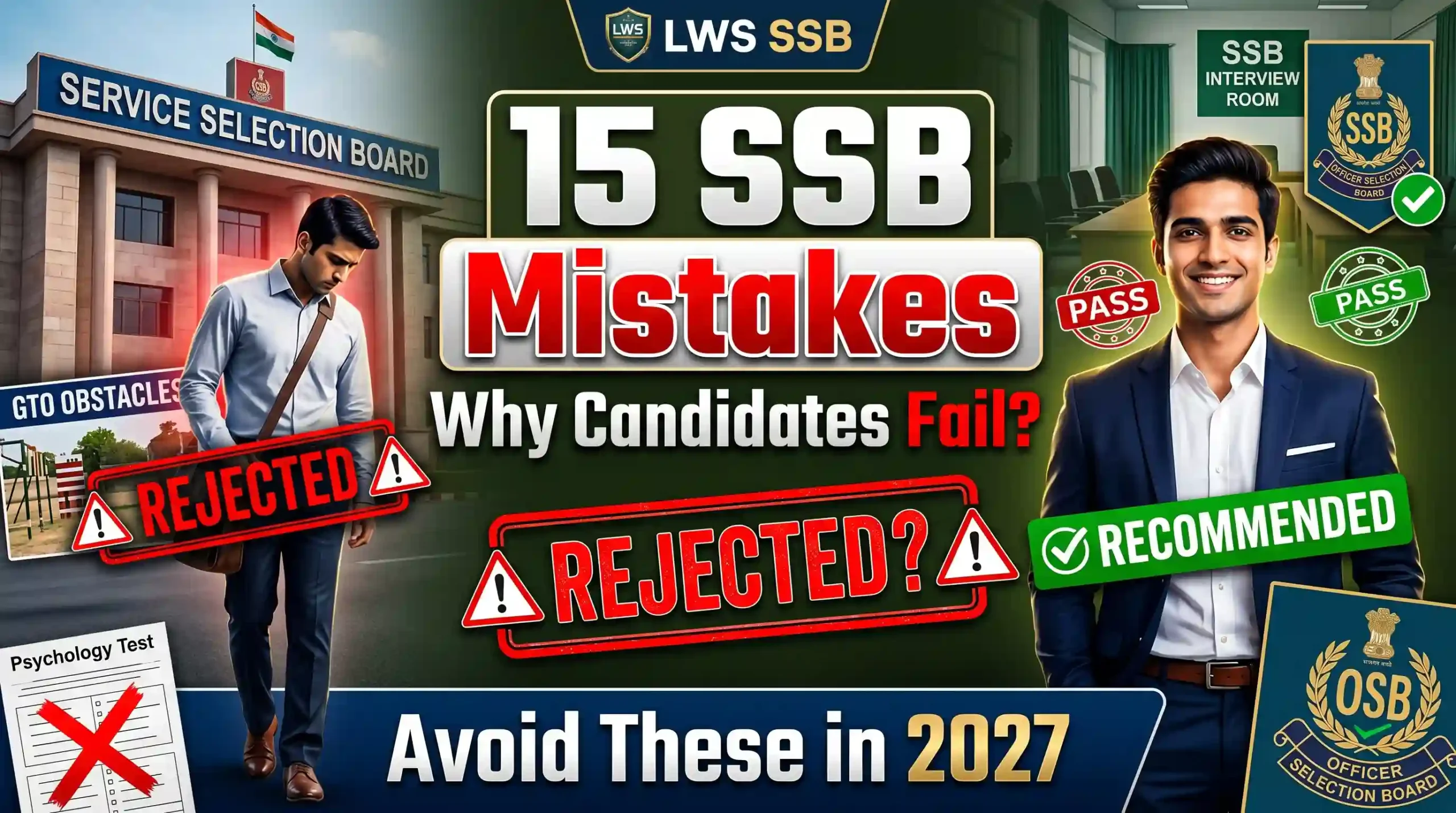
The Services Selection Board (SSB) Interview is one of the most unique and challenging selection processes in the world. Every year, thousands of candidates clear NDA, CDS, AFCAT, TES, NCC, and SSC-Tech written examinations, only to face rejection at the SSB stage. Many aspirants are academically strong and physically fit, yet they fail to secure a recommendation.
The reason is simple: SSB is not merely a test of knowledge. It is a comprehensive assessment of personality, leadership potential, decision-making ability, and Officer Like Qualities (OLQs).
If you are preparing for SSB Interview 2027, understanding common SSB Mistakes can significantly improve your chances of success. In this guide, LWS SSB Interview highlights the most common reasons candidates fail and explains how to avoid them.
Understanding the Purpose of SSB
Before discussing mistakes, it is important to understand what assessors are actually looking for.
The SSB aims to identify candidates who demonstrate Officer Like Qualities, including leadership, initiative, confidence, responsibility, social adaptability, teamwork, communication skills, and emotional stability.
Assessors are not looking for perfection. They are looking for genuine personalities with the potential to become military leaders.
1. Trying to Act Like Someone Else
One of the biggest SSB Preparation Mistakes is attempting to create a fake personality.
Many candidates memorize model answers, imitate recommended candidates, or try to behave like an ideal officer. Since assessors evaluate candidates through multiple tests over five days, artificial behavior becomes obvious very quickly.
How to Avoid It:
- Be natural and authentic.
- Express genuine thoughts.
- Focus on improving yourself rather than copying others.
2. Lack of Self-Awareness
Candidates often struggle when asked basic questions about themselves, their strengths, weaknesses, goals, hobbies, or achievements.
Without self-awareness, responses become inconsistent across psychology tests, interviews, and group tasks.
How to Avoid It:
- Analyze your personality honestly.
- Prepare genuine examples from your life.
- Understand your strengths and improvement areas.
3. Poor Communication Skills
Communication plays a critical role during PPDT discussions, GTO tasks, Lecturette, and Personal Interview.
Candidates who cannot express their thoughts clearly often struggle to demonstrate leadership potential.
How to Avoid It:
- Practice speaking regularly.
- Participate in discussions.
- Improve vocabulary and confidence.
4. Dominating Group Discussions
Many aspirants mistakenly believe that speaking the most guarantees selection.
In reality, candidates who constantly interrupt others or attempt to dominate discussions often create a negative impression.
How to Avoid It:
- Listen actively.
- Respect other viewpoints.
- Contribute meaningfully instead of excessively.
5. Remaining Silent During Group Tasks
The opposite mistake is equally dangerous.
Some candidates hesitate to participate because they fear making mistakes.
How to Avoid It:
- Share your ideas confidently.
- Take initiative when appropriate.
- Engage actively with the group.
6. Weak Current Affairs Knowledge
Current affairs are frequently discussed during interviews, group discussions, and lecturettes.
A lack of awareness often signals insufficient curiosity and preparation.
How to Avoid It:
- Read newspapers daily.
- Follow national and international events.
- Stay updated on defence-related developments.
7. Negative Thinking in Psychology Tests
Psychology tests reveal natural thought patterns.
Candidates who consistently display pessimism, fear, helplessness, or avoidance tendencies may struggle to secure recommendations.
How to Avoid It:
- Develop a solution-oriented mindset.
- Focus on constructive responses.
- Practice positive thinking in daily life.
8. Lack of Leadership Initiative
Leadership is one of the most important Officer Like Qualities.
Candidates who constantly wait for others to act often miss opportunities to demonstrate leadership potential.
How to Avoid It:
- Take responsibility during tasks.
- Encourage team participation.
- Lead through cooperation, not authority.
9. Overconfidence
Confidence is essential, but overconfidence can be harmful.
Candidates who appear arrogant or dismissive often struggle during group assessments.
How to Avoid It:
- Remain humble.
- Accept feedback positively.
- Balance confidence with respect.
10. Poor Time Management During Tests
Many candidates know the answers but fail to complete psychology tests due to poor speed management.
How to Avoid It:
- Practice under timed conditions.
- Improve writing speed.
- Avoid overthinking.
11. Inconsistent Responses Across Assessments
SSB assessors compare observations from Psychology Tests, GTO Tasks, and Personal Interviews.
Contradictions often create doubts about personality consistency.
How to Avoid It:
- Be truthful throughout the process.
- Avoid exaggerated claims.
- Maintain consistency in responses.
12. Ignoring Physical Fitness
While SSB is primarily a personality assessment, physical fitness reflects discipline, endurance, and commitment.
How to Avoid It:
- Maintain a regular fitness routine.
- Improve stamina and endurance.
- Adopt healthy habits.
13. Memorizing Psychology Responses
Some candidates attempt to memorize stories, WAT responses, and SRT solutions.
This approach often results in unnatural and unrealistic answers.
How to Avoid It:
- Develop genuine understanding.
- Respond naturally.
- Focus on personality development rather than shortcuts.
14. Fear of Failure
Many candidates perform below their potential because they become overly focused on the outcome.
Anxiety often affects communication, decision-making, and confidence.
How to Avoid It:
- Focus on performance, not results.
- Treat SSB as a learning experience.
- Maintain a positive mindset.
15. Lack of Professional Guidance
Many aspirants prepare entirely on their own and unknowingly repeat the same mistakes.
Structured mentorship often helps candidates identify weaknesses and improve systematically.
How to Avoid It:
- Seek expert feedback.
- Participate in mock assessments.
- Work on personality development consistently.
What Recommended Candidates Do Differently?
Recommended candidates are not necessarily the smartest or most talented individuals. They simply demonstrate stronger Officer Like Qualities consistently across all stages of assessment.
- They remain authentic.
- They communicate effectively.
- They take initiative.
- They work well in teams.
- They stay calm under pressure.
- They demonstrate responsibility and maturity.
Why Choose LWS SSB Interview Preparation?
LWS SSB Interview focuses on developing genuine Officer Like Qualities rather than teaching artificial techniques. Our training programs help candidates understand the SSB process, improve personality traits, and build confidence through practical exposure.
- Comprehensive SSB Preparation Programs.
- Psychology Test Training.
- GTO Task Guidance.
- Personal Interview Preparation.
- Mock SSB Assessments.
- Communication & Personality Development.
- One-to-One Expert Feedback.
- Experienced Defence Mentors.
Whether you are appearing through NDA, CDS, AFCAT, TES, SSC-Tech, or NCC entries, LWS SSB Interview helps aspirants identify weaknesses, improve Officer Like Qualities, and maximize recommendation chances.
Conclusion
Understanding the most common SSB Mistakes is one of the smartest ways to improve your performance. Most rejections occur not because candidates lack potential, but because they unknowingly display behaviors that assessors associate with weak Officer Like Qualities.
If you genuinely want to improve your chances in SSB Interview 2027, focus on personality development, self-awareness, communication skills, leadership qualities, and consistent preparation. With expert mentorship and realistic assessment training from LWS SSB Interview, you can avoid these common mistakes and move closer to earning your recommendation.